
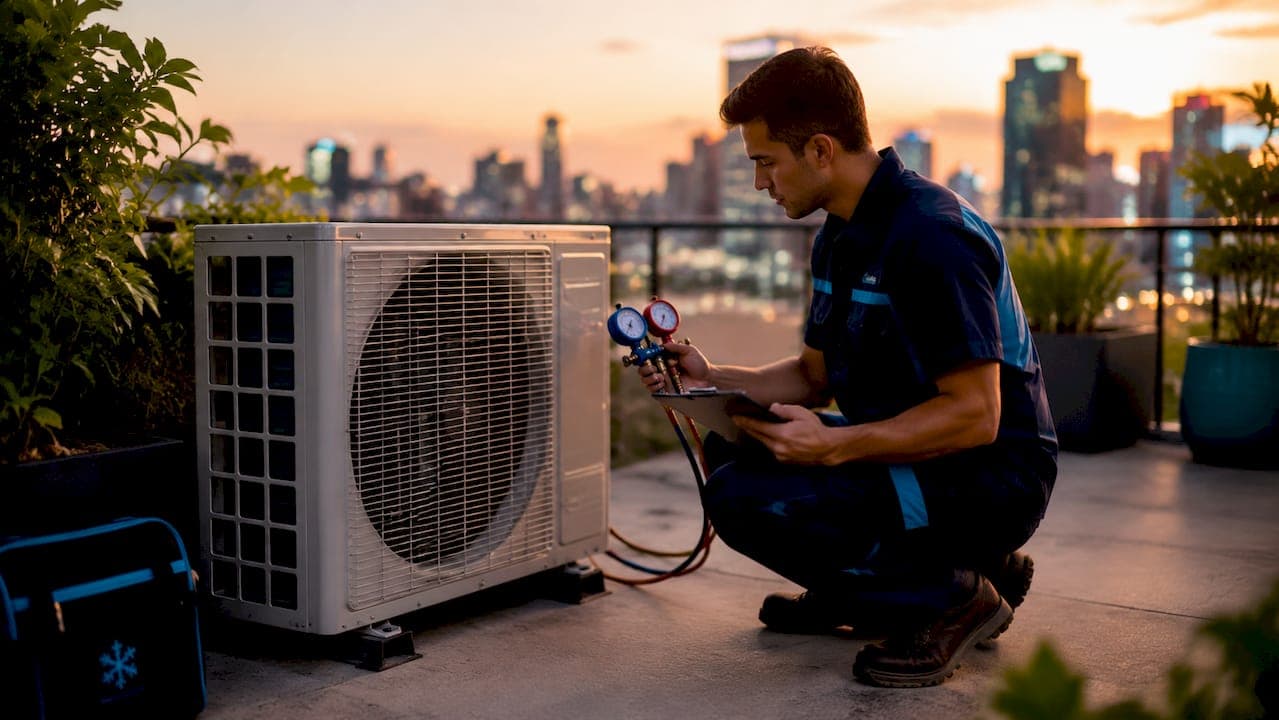
A cooling cycle is a continuous thermodynamic process that removes heat from indoor air and transfers it outside, keeping your home comfortable and dry. Known formally as the vapour compression refrigeration cycle, it runs through four primary stages: evaporation, compression, condensation, and expansion. Refrigerant circulates through each stage, changing between liquid and gas to absorb and release heat. Understanding this process helps you make better decisions about your system's energy use, maintenance, and comfort. Frostairconditioning installs and services these systems across Exeter and the South West, so this guide reflects real-world experience with how the cycle performs in British homes.
What is a cooling cycle and how does it work?
The cooling cycle is the engine behind every air conditioning system. Refrigerant travels in a closed loop through four components, changing state at each stage to move heat from inside your home to outside. The cycle never creates cold air. It removes heat, and the absence of heat is what you feel as coolness.
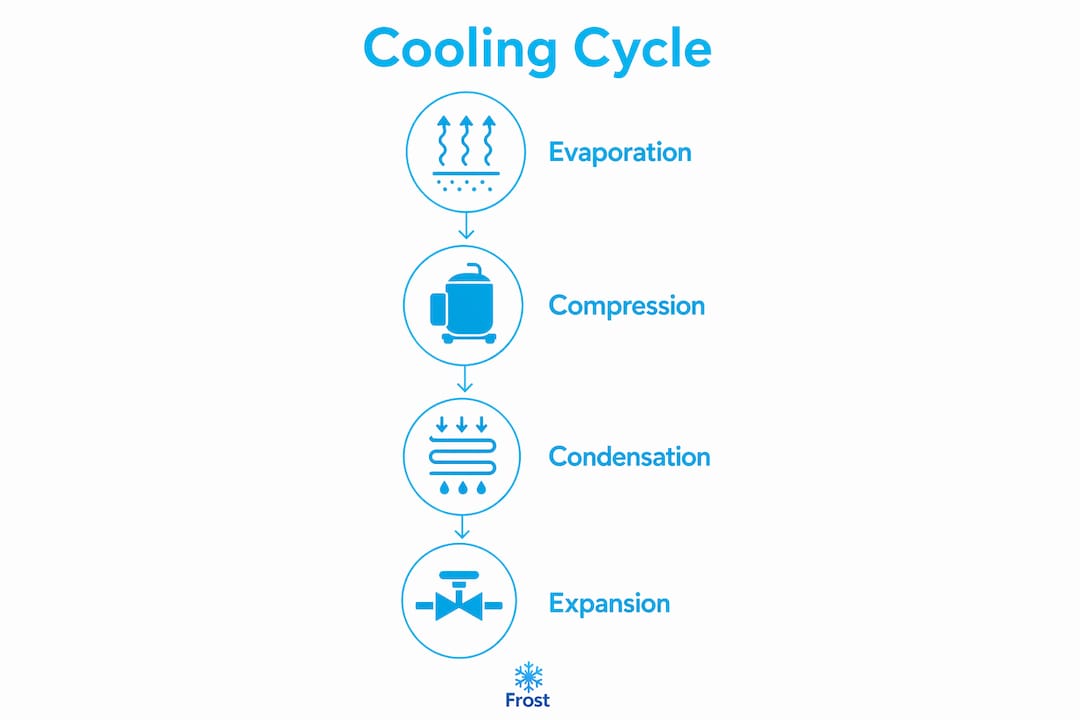
Each stage has a specific job. In the evaporator, refrigerant absorbs heat from your indoor air and boils into a gas. The compressor then raises the gas to high pressure and temperature. The condenser rejects that heat to the outdoor air, turning the gas back into a liquid. Finally, the expansion valve drops the pressure sharply, preparing the refrigerant to boil again. The loop repeats continuously while your system runs.
This is why refrigeration moves heat rather than generating cold. Efficiency depends on keeping pressures and temperatures balanced at every stage. Any deviation reduces performance before you notice a drop in cooling.
What are the main components of the cooling cycle?
Four components make the cooling cycle work. Each one handles a distinct part of the heat transfer process, and a fault in any single component affects the whole loop.
| Component | Function |
|---|---|
| Compressor | Raises refrigerant pressure and temperature, driving it around the loop |
| Condenser | Rejects heat to outdoor air, converting refrigerant vapour to liquid |
| Expansion valve | Drops refrigerant pressure, triggering boiling in the evaporator |
| Evaporator | Absorbs heat from indoor air as refrigerant boils into vapour |
The compressor is the hardest-working part. It is also the largest electricity consumer in any HVAC system. Optimising pressure differentials across the cycle can reduce energy use by 20–40% compared to older systems. That figure explains why upgrading an ageing unit often cuts electricity bills noticeably within the first season.
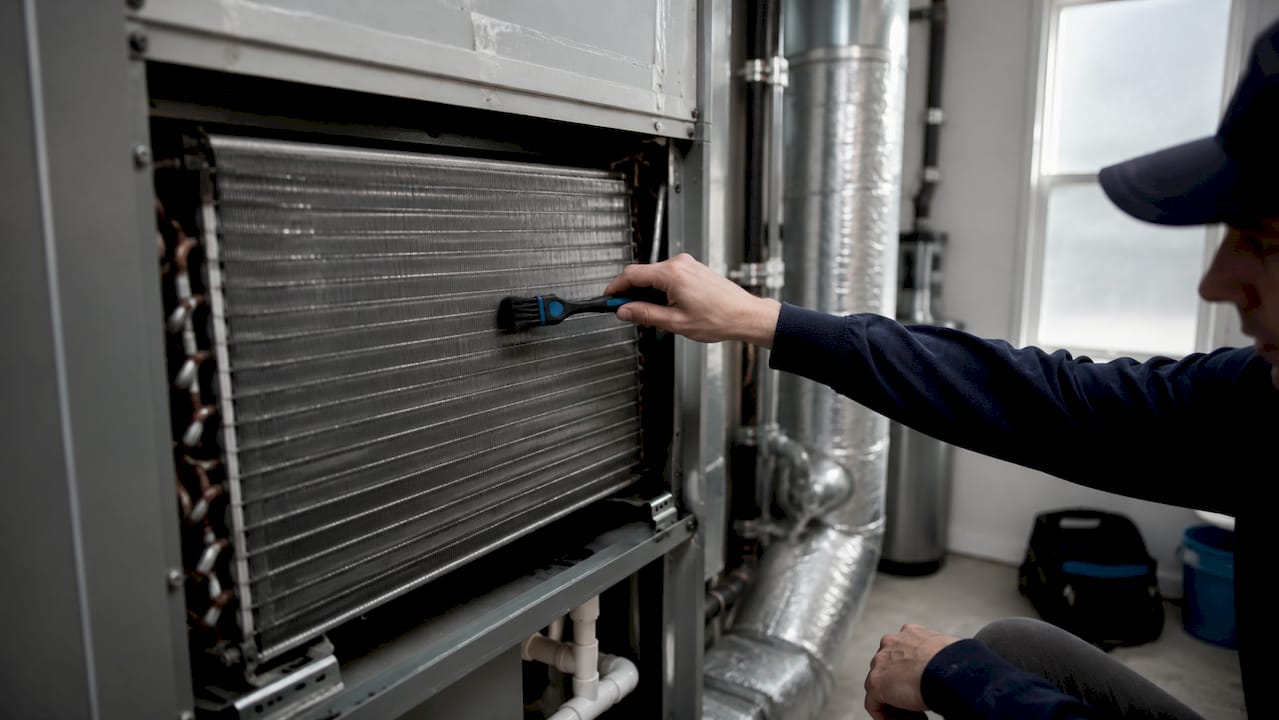
The evaporator and condenser are both heat exchangers. They rely on airflow to do their jobs. Block either one with dust or debris and the whole cycle suffers. The expansion valve is small but critical. It controls the exact pressure drop that allows the refrigerant to boil at the right temperature inside the evaporator coil.
How does refrigerant phase change drive the cooling process?
The phase change is where the real work happens. When refrigerant boils inside the evaporator, it absorbs heat at a constant saturation temperature, pulling energy from the warm air passing over the coil. This constant-temperature absorption is far more efficient than simply warming a liquid, because phase changes transfer large amounts of energy without a rise in temperature.
Each refrigerant has a specific pressure and temperature relationship. Lowering pressure promotes boiling in the evaporator; raising pressure encourages condensing in the condenser. Technicians use pressure-temperature charts to verify that the system is operating within the correct range. If pressures drift, the refrigerant may not fully change state, and efficiency drops.
Two measurements tell technicians whether the cycle is healthy: superheat and subcooling. Superheat confirms that refrigerant has fully evaporated before reaching the compressor. Subcooling confirms it has fully condensed before reaching the expansion valve. Both protect the compressor from damage caused by liquid refrigerant entering at the wrong stage.
A common misconception is that air conditioning "makes cold air." The system moves heat out of your home. The indoor air feels cooler because its heat has been carried away by the refrigerant and dumped outside through the condenser.
Pro Tip: If your system feels less effective on very hot days, the condenser is likely struggling to reject heat. Keeping the outdoor unit clear of leaves, overgrown plants, and debris helps it work at full capacity.
- Refrigerant boils at low pressure in the evaporator, absorbing heat from indoor air.
- It condenses at high pressure in the condenser, releasing that heat outdoors.
- Superheat and subcooling readings confirm the cycle is running correctly.
- Phase changes transfer heat far more efficiently than temperature changes alone.
Why does the cooling cycle matter for energy efficiency and comfort?
A well-maintained cooling cycle does two things your home needs: it lowers temperature and removes humidity. Moisture condenses on the cold evaporator coil as warm indoor air passes over it. That condensation drains away, leaving the air drier and more comfortable. Homeowners often focus on temperature alone, but humidity control is equally important, particularly in the South West where summer air can feel heavy and damp.
The compressor drives the cycle, and its efficiency directly affects your electricity bill. Modern systems achieve higher SEER2 and SCOP ratings by improving how the compressor manages pressure. An older system running with degraded refrigerant charge or dirty coils forces the compressor to work harder for the same result, consuming more energy.
Pro Tip: Book a service check before summer arrives. A technician can verify refrigerant charge, clean coils, and check airflow in under an hour. That single visit often recovers lost efficiency and prevents costly breakdowns mid-season.
- Clean evaporator and condenser coils transfer heat efficiently and reduce compressor load.
- Correct refrigerant charge keeps phase changes happening at the right pressures.
- Good airflow across both coils is as important as the refrigerant itself.
- A correctly sized system dehumidifies effectively. An oversized unit cools too quickly and shuts off before removing enough moisture.
| Maintenance action | Efficiency benefit |
|---|---|
| Coil cleaning | Restores full heat transfer capacity |
| Refrigerant charge check | Prevents compressor overwork and energy waste |
| Filter replacement | Maintains airflow volume over evaporator coil |
| Outdoor unit clearance | Allows condenser to reject heat without restriction |
For practical guidance on cooling your home efficiently, the relationship between cycle health and energy use is worth understanding before the warmer months arrive.
What common problems affect the cooling cycle?
Most cooling cycle problems come from three sources: refrigerant leaks, restricted airflow, and incorrect charge. Catching them early prevents expensive repairs and keeps your energy bills in check.
-
Refrigerant leaks. The refrigerant system is sealed. Leaks reduce efficiency, cause environmental damage, and force the compressor to run longer to achieve the same cooling. If your system needs refrigerant topped up repeatedly, a leak is the cause. A qualified F-Gas certified engineer must locate and repair the leak before recharging.
-
Dirty filters and coils. Restricted airflow reduces heat absorption in the evaporator. When airflow drops too low, the coil temperature falls below freezing and ice forms on the coil. A frozen evaporator blocks airflow entirely, stopping the cycle and risking compressor failure. Replacing filters every one to three months prevents this.
-
Incorrect refrigerant charge. Undercharging or overcharging disrupts phase transitions. An incorrect charge makes the compressor work harder and raises energy use. Only a certified engineer can measure superheat and subcooling accurately and adjust the charge to the manufacturer's specification.
-
Blocked outdoor unit. The condenser needs clear airflow to reject heat. Leaves, garden furniture, or overgrown hedges around the outdoor unit reduce its ability to condense refrigerant, raising system pressure and cutting efficiency.
-
Electrical faults. Capacitors and contactors in the compressor circuit wear over time. A failing capacitor causes the compressor to struggle at start-up, shortening its life significantly.
Pro Tip: If your indoor unit is blowing air but the room is not cooling, check whether the outdoor unit is running. A silent outdoor unit while the indoor fan operates usually points to a compressor or electrical fault that needs professional attention.
For a full overview of air conditioning maintenance tips, regular checks are the most cost-effective way to keep the cooling cycle running as it should.
Key takeaways
A properly functioning cooling cycle is the single most important factor in your air conditioning system's efficiency, comfort output, and running cost.
| Point | Details |
|---|---|
| Four-stage process | The cycle runs through evaporation, compression, condensation, and expansion continuously. |
| Heat transfer, not cold creation | Refrigerant moves heat out of your home; it does not generate cold air. |
| Humidity removal | The evaporator coil removes moisture from indoor air, improving comfort beyond temperature alone. |
| Compressor efficiency | Correct refrigerant charge and clean coils reduce compressor load and cut energy bills. |
| Maintenance prevents failure | Dirty filters, refrigerant leaks, and blocked coils are the most common causes of cycle breakdown. |
Why I think most homeowners underestimate the cooling cycle
Most people treat their air conditioning unit like a light switch. They turn it on, expect cold air, and call someone when it stops working. The cooling cycle is more like an engine. It needs the right fuel, clean airways, and regular checks to run at its best.
The humidity point is the one I find homeowners most surprised by. A well-functioning cycle on a muggy July afternoon in Devon does not just lower the temperature. It pulls moisture out of the air, and that is what makes the room feel genuinely comfortable rather than just slightly less hot. An oversized unit that short-cycles will cool the air quickly but leave the humidity high. You end up with a room that feels cold and clammy rather than fresh.
Refrigerant leaks are the other area where I see homeowners lose money quietly over years. A slow leak means the system gradually loses efficiency. Bills creep up, the compressor runs longer, and eventually something fails. The fix is straightforward: find the leak, repair it, and recharge correctly. But because the decline is gradual, many people do not connect the rising bills to the system until the damage is done.
My honest advice is to treat a professional service check the same way you treat a boiler service. Once a year, before the season you need it most. It costs far less than a compressor replacement.
— James
How Frostairconditioning keeps your cooling cycle in top condition
A cooling cycle is only as good as the installation and maintenance behind it. Frostairconditioning is F-Gas certified and installs domestic air conditioning systems across Exeter and the South West, with same-day installs available and 0% finance options to spread the cost.

Whether you need a new system installed correctly from day one or an existing unit serviced to restore its efficiency, the team at Frostairconditioning handles both. A properly installed system with the right refrigerant charge, correctly sized for your space, will dehumidify and cool reliably for years. For domestic air conditioning installation or to book a service and maintenance visit, get in touch with Frostairconditioning today and request a quote.
FAQ
What is the cooling cycle in simple terms?
The cooling cycle is the process your air conditioning system uses to remove heat from indoor air and release it outside. It runs continuously through four stages: evaporation, compression, condensation, and expansion.
How long does a cooling cycle last?
A typical residential air conditioning cycle runs for around 15–20 minutes before the thermostat signals the system to pause. Shorter cycles often indicate an oversized unit or a fault worth investigating.
What affects how well the cooling cycle works?
Refrigerant charge, airflow volume over the coils, and the cleanliness of filters and heat exchangers all directly affect cycle performance. A fault in any one of these reduces efficiency and increases running costs.
Does the cooling cycle remove humidity?
Yes. Moisture in the indoor air condenses on the cold evaporator coil and drains away. This dehumidification effect is a key comfort benefit, particularly in humid climates.
When should I call a professional about my cooling cycle?
Call a certified engineer if your system is blowing warm air, forming ice on the indoor unit, running constantly without reaching the set temperature, or if energy bills rise without an obvious cause.