
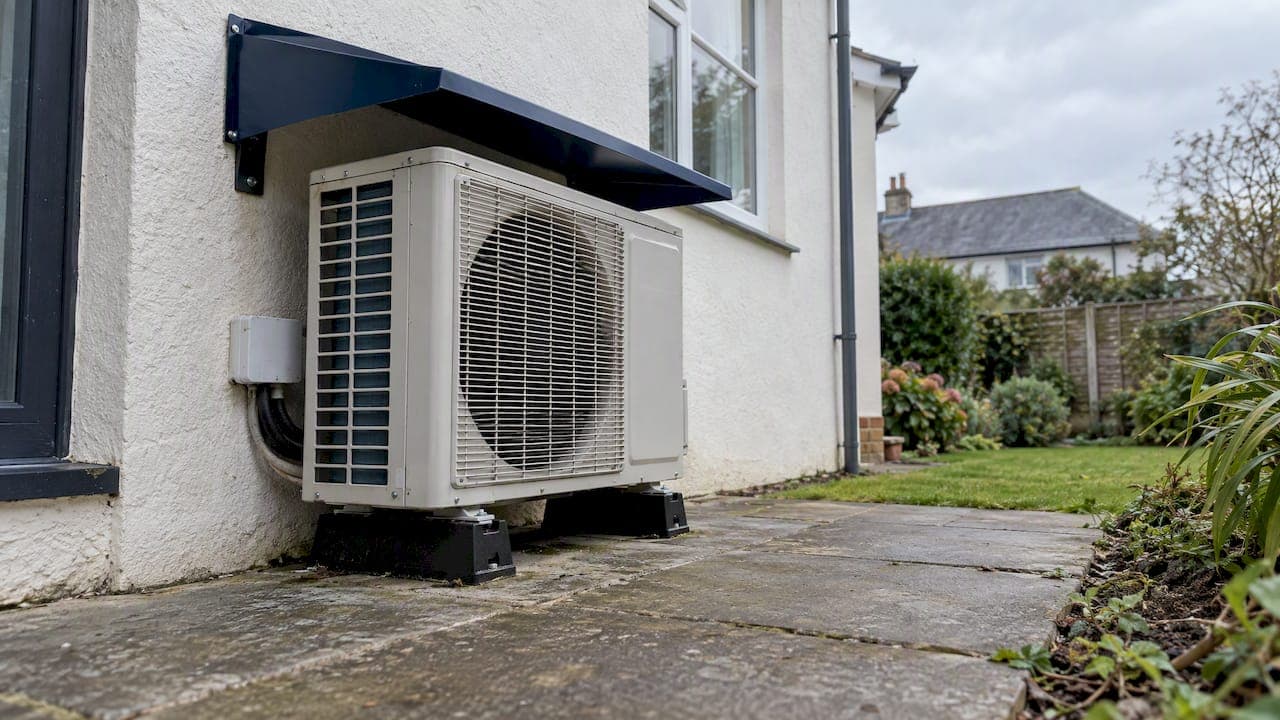
The safest way to weatherproof an outdoor air conditioning unit is to combine three things: correct siting and elevation, a breathable weather-resistant cover or rigid shelter that does not block airflow, and certified engineer support for anything touching refrigerant or wiring. Skipping the airflow part, or attempting refrigerant work yourself, can void a warranty or create a genuine safety risk. Refrigerant handling should only ever go to F-gas or REFCOM certified engineers.
TL;DR:
- Use a breathable cover only while the unit is idle; remove it before operation and during warming spells to prevent trapped moisture and airflow restriction.
- Choose a pedestal for drainage and ice clearance, a rigid canopy for snow or coastal exposure, and a loose debris net for heavy leaf fall.
- Measure the unit, pipework, and service clearance before buying; favor mesh or louvred sides and fasteners that resist wind, and avoid sealed covers that trap condensation.
- Leave the drain and service panel accessible, and assign refrigerant, leak checks, and wiring to certified engineers; restricted airflow can jeopardize safety and warranty coverage.
- After storms, check anchors and casing; in spring, remove covers, clear coil grime, and confirm condensate drainage before cooling season.
Table of Contents
- Weatherproofing options: covers, shelters, stands and debris guards
- How to choose the right cover or shelter
- Fitting and using covers safely
- Seasonal maintenance checklist: autumn, winter and spring
- Installer guidance and safety rules for outdoor units
- Warranty and compliance considerations for weatherproofed units
- Weatherproofing for shops, offices and industrial sites
- Cost considerations for weatherproofing installations
- How a professional weatherproofing upgrade typically runs
- When a cover is enough and when to book a site visit
- How Frost Air Conditioning helps you weatherproof with confidence
- FAQ
- Sources
Weatherproofing options: covers, shelters, stands and debris guards
Different exposure problems call for different fixes, and most homeowners end up combining two or three of these rather than relying on one.
Soft covers are the most common starting point. They are usually made from polyester or PVC-coated fabric with a waterproof outer layer and, on better products, a breathable mesh panel that lets moisture escape instead of pooling underneath. They suit short-term protection, such as covering a unit while a house is being renovated or during a period when the system sits idle over several weeks of heavy leaf fall.
Rigid shelters and hoods sit a step up. A fixed aluminium or steel canopy keeps rain and snow off the top of the unit permanently while leaving the sides open for airflow, which matters most on exposed roofs, coastal properties facing salt spray, or gardens that get heavy winter snow loads.
Stands and pedestals solve a different problem: ground contact. Raising a unit off the ground improves drainage, keeps the base clear of leaf litter, and reduces the chance of meltwater refreezing around the base in winter.
- Soft covers: best for short-term or seasonal protection where the unit will sit unused.
- Rigid shelters: best where snow load, coastal exposure or permanent protection is the priority.
- Pedestals and stands: best for drainage, debris clearance and reducing ice risk at ground level.
- Debris nets: best for gardens with heavy leaf fall, fitted loosely enough not to restrict intake air.
How to choose the right cover or shelter
Getting the size and ventilation right matters more than the material itself. A cover that fits too tightly or seals the unit completely can do more harm than leaving it exposed.
- Measure the full footprint of the unit, including any protruding pipework, and add clearance on every side for service access, matching the clearance guidance in the manufacturer's own installation manual.
- Check the top panel height allows for snow load without the cover sagging onto the fan grille.
- Favour covers with mesh or louvred side panels rather than fully sealed fabric, since trapped moisture under a sealed cover encourages corrosion and mildew.
- Look for reinforced seams and a UV-stabilised outer layer if the unit sits in direct sun for most of the day.
- Check the fixing method before buying: adjustable straps and a base hem with a drawcord hold far better in wind than elastic alone.
Pro Tip: Choose a cover one size up rather than a snug fit; a slightly looser cover with mesh panels breathes better and survives wind gusts without tearing at the seams.
Avoid anything described as fully waterproof with no ventilation claim at all. These trap condensation against the casing, and that moisture has nowhere to go until someone removes the cover.
Fitting and using covers safely
A cover is only useful if it goes on and comes off at the right time. Fitting one while the unit is running, or leaving it on through a defrost cycle, causes more problems than it solves.
- Fit a cover only when the unit will be idle for an extended period, such as over a long winter cold spell or ahead of a forecast storm.
- Switch the unit off at the isolator before fitting anything over it.
- Drape the cover over the top and sides, leaving the base open if the model allows, so air can still circulate underneath.
- Secure straps or a drawcord hem snugly but without crushing the casing, and check nothing presses against the fan blades.
- Remove the cover before switching the system back on, and whenever outdoor temperatures rise enough to trigger regular use.
- Do inspect the unit each time you remove a cover, checking for trapped leaves, standing water or early corrosion.
- Do dry a fabric cover fully before folding it away for storage to stop mildew setting in.
- Don't run the unit with any part of the cover still in place.
- Don't use a fully sealed enclosure, bin bag or tarpaulin wrapped tightly round the casing. The outdoor unit manual specifically warns against stacking items against the unit or building covers that restrict airflow.
Seasonal maintenance checklist: autumn, winter and spring
A short seasonal routine does more to prevent weather damage than any single product.
- Autumn: clear fallen leaves from around the base, fit a debris net if the garden has heavy leaf fall, and check the condensate drain isn't silting up.
- Winter: confirm the unit still sits above expected snow depth, use a breathable top cover only during genuinely idle cold spells, and remove it during any warming spell so meltwater doesn't refreeze underneath.
- Spring: take covers off completely, inspect the coil fins for grime, check the condensate drain runs freely, and book a seasonal service check if cooling output seems to have dropped.
- After any storm: check straps and anchors are still tight, and look over the casing for fresh corrosion or dents.
Filters that clean themselves automatically reduce the manual maintenance load and help keep dust from building up inside the unit over a season, which supports steadier energy performance between services.
Installer guidance and safety rules for outdoor units
Manufacturer manuals and UK certification rules both point the same way: protect the unit without trapping it.
Siting advice from manufacturer manuals is consistent: raise the unit on a leg stand or pedestal, keep drainage free from frost, and never let a wind barrier sit so close that it creates turbulence around the casing. The most common mistake installers see is a homeowner sealing a unit in tightly to "protect" it from rain, which traps heat and moisture and can shorten the compressor's working life.
Any work involving refrigerant, leak checking or internal wiring sits outside DIY territory. UK guidance requires this work to go to personnel holding the correct F-gas qualification and a company holding the matching certification.
Pro Tip: If you're unsure whether a job is cosmetic or technical, a quick photo sent to a certified engineer before you touch anything usually settles it.
Warranty and compliance considerations for weatherproofed units
Most manufacturer warranties stay valid as long as the siting and clearance rules in the installation manual are followed. Elevating the unit, keeping wind barriers at the recommended distance and maintaining frost-free drainage are exactly the conditions the installation manual sets out, and sticking to them protects the warranty rather than risking it.
Where things go wrong is airflow restriction. A cover or enclosure that blocks the intake or outlet grille while the unit runs can cause the compressor to overheat, and a manufacturer is entitled to treat that as misuse rather than a covered fault.
For commercial premises, compliance runs wider than warranty terms alone. Any system containing fluorinated gases falls under F-gas regulation, and leak checking, maintenance and refrigerant handling must be carried out and logged by someone holding the right category of qualification. A shop or office fitting its own weatherproof enclosure around a commercial unit without checking service access clearances can inadvertently breach the maintenance condition in its own service contract, since engineers need unrestricted access to carry out the legally required checks.
The practical rule is simple: weatherproofing should always leave full access to the casing, drain and service panel, whether the property is a home or a business.

Weatherproofing for shops, offices and industrial sites
Commercial settings tend to face the same weather risks as homes, but at a larger scale and with less tolerance for downtime.
Shops with rooftop or alley-mounted units often deal with restricted space, so a low-profile rigid canopy that hugs the wall or parapet works better than a bulky shelter, and it keeps the unit out of customer sightlines while still shedding rain.
Offices with roof-mounted plant benefit from elevated steel frames that lift multiple units clear of ponding water, paired with a fixed canopy rather than fabric covers, since fabric is impractical to fit and remove at height on a regular basis.
Industrial sites usually have the highest exposure to dust, debris and vibration, so a robust mesh guard combined with a permanent rigid shelter tends to outlast anything fabric-based, and routine coil cleaning becomes more important given the heavier airborne dust load.
Across all three settings, the same principle from domestic installations applies: protection has to leave service panels and drain outlets reachable without dismantling anything, since F-gas rules require that access for scheduled checks.
Cost considerations for weatherproofing installations
Costs vary by solution rather than by a single flat rate. A basic breathable fabric cover is the cheapest option and suits light seasonal use. A pedestal or elevated stand adds a modest one-off cost but solves drainage and ground clearance permanently, as explained in these end-of-summer roof maintenance tips. A bespoke rigid canopy or aluminium shelter sits at the higher end, reflecting materials and fitting time, but it removes the need to buy, fit and replace fabric covers every year or two.

For an exact figure, pricing for a bespoke pedestal, shelter or protective fitting is available on request through our Domestic Installation service, since the right solution depends on the unit's size, the site's exposure and whether any existing pipework needs adjusting. Commercial jobs are quoted the same way through our Shop Fitting & Commercial service, as footprint and access vary site to site.
How a professional weatherproofing upgrade typically runs
Most weatherproofing upgrades start with a site visit rather than a product choice. An engineer checks existing clearances against the manufacturer's siting rules, looks at drainage, and assesses whether the unit needs raising before anything else gets fitted.
Simple fixes, like fitting a pedestal or a debris guard, are usually a same-day job once parts are on hand. A bespoke rigid shelter or canopy takes longer, since it is measured and often fabricated to fit the specific roofline or wall position, which typically means a return visit for fitting after the survey.
Anything that involves moving the unit, adjusting pipework or checking refrigerant lines has to go through a certified engineer, and that work gets logged against the F-gas company certification covering the job. For most homes, the whole process from enquiry to a finished, weatherproofed installation runs across a single visit for simple upgrades, or two visits where a bespoke shelter needs fabricating first.
When a cover is enough and when to book a site visit
A clean, accessible unit with light debris exposure usually only needs a breathable cover and a seasonal clean. Call a professional when access is restricted, when there's any sign of electrical fault, refrigerant smell or vibration, or when the casing shows corrosion. Photograph the unit before a storm season starts. It helps with insurer or warranty claims if damage happens later.
— James
How Frost Air Conditioning helps you weatherproof with confidence
Covering a unit correctly solves the easy part. The harder part is knowing whether the siting, drainage and clearances were right in the first place, and that's where our engineers add the most value. We install pedestals and rigid shelters designed to maintain airflow while protecting against snow, rain and debris, and ensure that all work involving refrigerant or wiring is performed by certified engineers.

- Pedestal and stand fitting to lift units clear of ground moisture and leaf build-up.
- Bespoke rigid shelters and canopies designed around your roofline or wall position.
- Seasonal checks and annual service contracts to catch weather-related wear early.
- Emergency breakdown response if a storm or ice causes a fault.
If you'd rather have a professional eye on your setup before fitting a cover yourself, book a free survey through our domestic installation service and we'll tell you honestly what your unit actually needs.
FAQ
Should I cover my outside air conditioner?
A breathable, well-ventilated cover helps during long idle periods, heavy snow or storm warnings, but it should come off whenever the unit is running. A cover left on a running unit traps heat and moisture against the casing, which does more harm than leaving it exposed.
How cool should my house be when it's 100 degrees outside?
This depends on your system's capacity and personal comfort rather than a fixed rule, and isn't something a cover or shelter affects. If your unit is struggling to keep the house comfortable in extreme heat, that's usually a sign it needs a service check rather than a weatherproofing fix.
Can an outdoor AC unit work in rain?
Outdoor units are designed to operate in rain, since the casing and electrical components are built for outdoor exposure. The risk comes from blocked drainage or a damaged casing, not from rainfall itself, which is why clear drainage matters more than covering the unit while it runs.
What is the outside unit of an AC called?
The outside unit is usually called the condenser unit or outdoor unit, and it houses the compressor, condenser coil and fan that release heat from inside the home. It's the part that needs elevation, clearance and drainage to stay protected through the year.
Sources
- Installation manual — Aira outdoor unit (UK)
- F‑gas: qualifications and certificates for RAC personnel (GB guidance)
- Daikin — Auto cleaning technology overview