

Rebates in air conditioning are financial incentives designed to reduce the upfront cost of purchasing and installing energy-efficient cooling systems. The role of rebates in air conditioning goes well beyond a simple discount. Federal programmes like HEEHRA (High-Efficiency Electric Home Rebate Act) and HOMES, utility incentives, and manufacturer promotions can combine to cut thousands of pounds from an installation bill. For income-qualified homeowners, combined incentives can exceed £11,000 on a single heat pump installation. Understanding how these incentives stack, who qualifies, and what has changed in 2026 is the difference between paying full price and paying a fraction of it.
How do rebates work for air conditioning systems?
Rebates reduce what you pay for a qualifying air conditioning system, either at the point of sale or through a claim you submit after installation. The mechanics vary by programme, but the eligibility rules follow a consistent pattern.
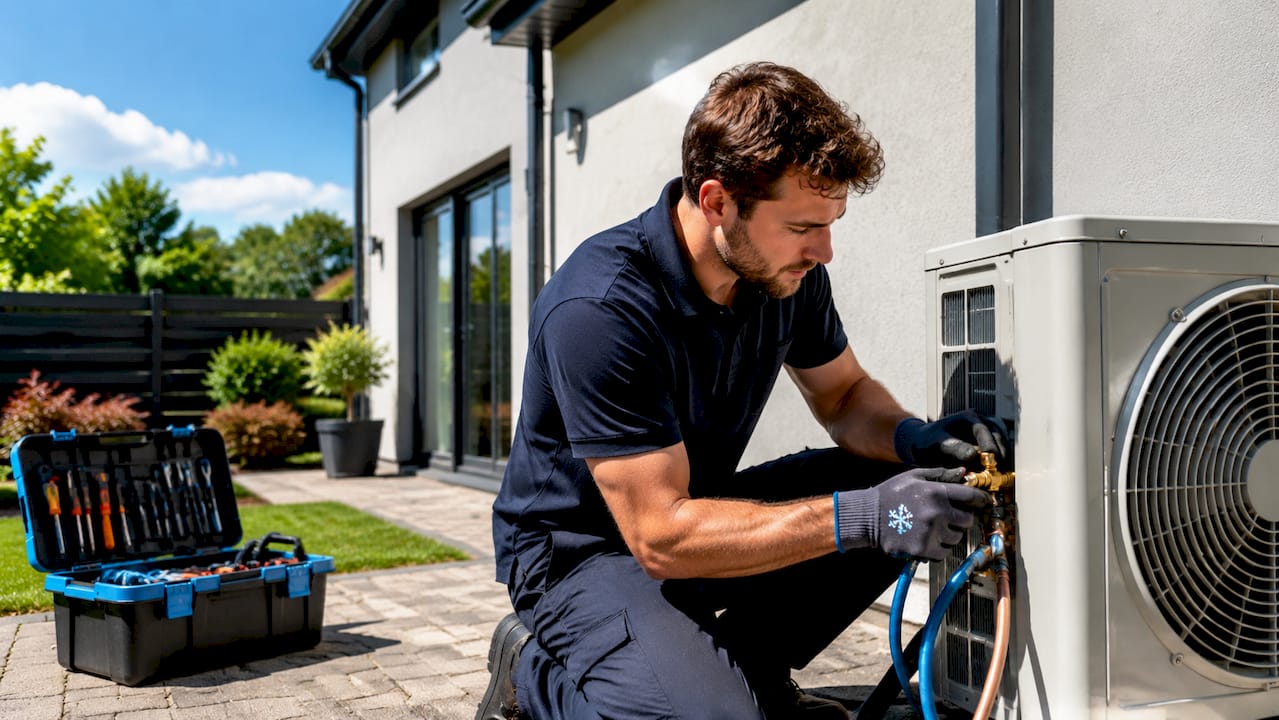
Most rebates require your system to meet a minimum efficiency rating. The two most common standards are SEER (Seasonal Energy Efficiency Ratio) and HSPF (Heating Seasonal Performance Factor). Utility rebates typically require verified SEER or HSPF thresholds and installation by a certified contractor. That second requirement matters more than most homeowners realise. If your installer is not enrolled in the relevant rebate programme, your claim can be rejected outright.
There are two main rebate delivery methods:
- Point-of-sale rebates reduce the price at the time of purchase. You pay less upfront, and the rebate is settled between the retailer, installer, and programme administrator.
- Mail-in rebates require you to submit documentation after installation. You pay full price first, then receive a cheque or bill credit weeks later.
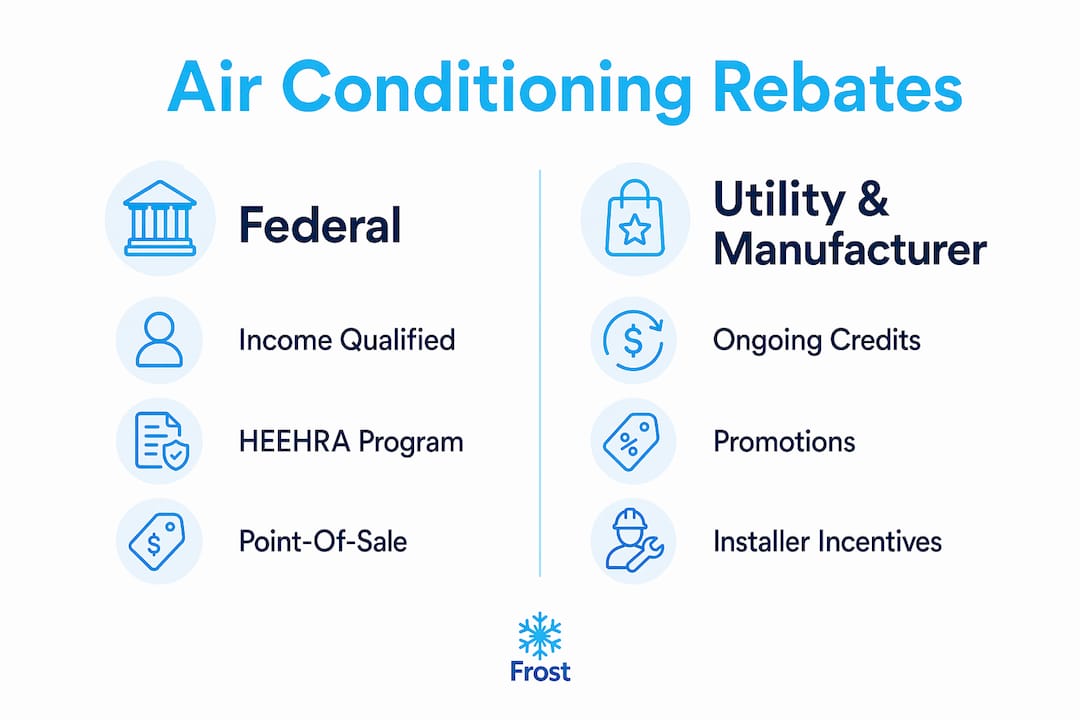
Federal programmes under HEEHRA operate as point-of-sale rebates for qualifying households. The DOE and IRS require homes to meet insulation and air-sealing standards before HVAC rebates can be claimed. That prerequisite catches many homeowners off guard.
Pro Tip: Check your home's insulation rating before booking an installation. Failing the air-sealing requirement can disqualify your entire rebate claim, even if your new system is fully eligible.
Tax treatment is another area worth understanding. The IRS treats rebates as a reduction in the purchase price of the equipment, not as income in most cases. However, IRS Announcement 2024-19 clarifies that rebates from related parties reduce your qualified expenses for tax credit calculations. That means a manufacturer rebate can lower the amount you can claim as a tax credit. Keep every receipt and rebate confirmation you receive.
What is rebate stacking, and how can homeowners maximise savings?
Rebate stacking is the practice of combining multiple incentive programmes on a single installation to achieve the greatest possible cost reduction. Done correctly, it is the single most powerful tool available to homeowners upgrading their air conditioning.
A typical stack works across three layers:
- Federal rebates under HEEHRA or HOMES, which offer the largest sums for income-qualified households.
- Utility rebates from your energy supplier, often tied to specific efficiency ratings and participation in demand response programmes.
- Manufacturer promotions, which add between £300 and £1,650 in rebates depending on the season and your region.
The order in which you complete upgrades matters enormously. Federal programmes often require insulation and air-sealing work to be finished before an HVAC installation qualifies. Missing that sequence can disqualify your rebates entirely. Manufacturer promotions are time-limited and region-specific, so timing your installation to coincide with an active promotion adds another layer of saving without extra effort.
Utility programmes add a dimension that one-time rebates cannot match. Some energy suppliers offer ongoing bill credits for homeowners who allow thermostat adjustments during peak demand periods. Those recurring credits can surpass the value of a one-time rebate over a two or three year period. That makes enrolment in a utility demand response programme worth serious consideration.
Pro Tip: Prioritise contractor quality over rebate size. A poorly installed system loses efficiency quickly, eroding every saving the rebate delivered. A certified, experienced installer protects both your rebate eligibility and your long-term running costs.
Verify rebate compatibility before you commit to any programme. Some federal and utility rebates cannot be combined, and the rules change by state and by year. Checking compatibility takes thirty minutes. Losing a rebate claim takes months to resolve.
How have 2026 policy changes impacted air conditioning rebates?
The most significant shift in 2026 is a restriction on which upgrades qualify for federal HEEHR rebates. The DOE updated its programme guidance in may 2026, and the change has direct consequences for homeowners planning heat pump installations.
"HEEHR rebates no longer apply to fuel-switching upgrades. The programme now limits rebates to electric-to-electric equipment upgrades, excluding gas-to-electric conversions." DOE Programme Notice 26-2, may 2026
HEEHR rebates no longer cover fuel-switching from fossil fuels to electric systems. That means if you currently have a gas furnace and want to replace it with an electric heat pump, the federal HEEHR rebate is off the table. Homeowners upgrading from one electric system to a more efficient electric system remain eligible. The distinction is critical when budgeting a new installation.
This policy shift significantly affects low-income households who stood to benefit most from the fuel-switching incentive. Those homeowners must now seek alternative incentives, such as state-level programmes or utility grants, to offset the cost of switching from gas to electric cooling. The 2026 DOE restrictions require homeowners to seek alternative incentives beyond HEEHR when planning a gas-to-electric upgrade.
The insulation and air-sealing prerequisite remains firmly in place. Homes must meet defined standards before any HVAC rebate can be claimed under federal programmes. That requirement has not changed, and it continues to be the most common reason claims are rejected.
For homeowners with existing electric air conditioning systems, the news is more straightforward. Upgrading to a higher-efficiency electric model still qualifies for HEEHR rebates, provided the system meets the required SEER rating and the installer holds the necessary certifications.
What types of air conditioning rebates are available?
Air conditioning rebates fall into four main categories, each with different eligibility rules, delivery methods, and values.
| Rebate type | Eligibility | Typical value | How you receive it |
|---|---|---|---|
| Federal HEEHRA | Income below 80% area median income | Up to £8,000 | Point of sale |
| Utility rebate | Minimum SEER/HSPF rating, certified installer | Up to £8,500 | Bill credit or cheque |
| Manufacturer promotion | Regional, seasonal, model-specific | £300–£1,650 | Mail-in or point of sale |
| Tax credit (IRS) | Qualifying equipment, reduced by rebates received | Percentage of net cost | Annual tax filing |
Federal point-of-sale rebates under HEEHRA offer the largest single amounts, but they are income-tested. Households below 80% of the area median income qualify for the full amount. Those between 80% and 150% qualify for partial rebates. Above 150%, federal HEEHRA rebates are not available, though tax credits remain accessible.
Utility rebates are the most widely available option. They do not carry income thresholds, but they do require:
- A system that meets the programme's minimum SEER or HSPF rating
- Installation by a contractor enrolled in the utility's rebate scheme
- Submission of documentation within the programme's claim window
Manufacturer promotions are the most variable. They run quarterly, cover specific models, and are often restricted to particular regions. Checking the manufacturer's current promotion calendar before choosing a model can add a meaningful saving with no extra qualification requirements.
Tax credits work differently from rebates. They reduce your tax bill rather than your purchase price. However, rebates received from manufacturers or installers reduce your qualified expenses for credit calculations, so the two incentives interact in ways that require careful record-keeping.
How can homeowners apply rebates effectively?
Getting the most from air conditioning rebates requires preparation before you book an installation, not after. The steps below reflect the order that protects your eligibility at every stage.
- Assess your home's current efficiency. Check insulation levels and air-sealing quality before anything else. Federal programmes require these to meet defined standards. Addressing them first keeps your HVAC rebate claim intact.
- Research available programmes. Look at federal, utility, and manufacturer rebates simultaneously. Note income thresholds, efficiency requirements, and claim deadlines for each.
- Choose a certified installer. Verify that your contractor holds F-Gas certification and is enrolled in the rebate programmes you plan to use. An uncertified installer disqualifies utility and federal claims regardless of the equipment installed.
- Time your installation. Manufacturer promotions run on quarterly cycles. Booking your installation during an active promotion adds savings without changing anything else about the process.
- Document everything. Keep purchase receipts, installation certificates, efficiency ratings, and rebate confirmation letters. The IRS and utility programmes both require detailed records, and some rebates count as income for tax purposes under specific circumstances.
- Combine rebates with financing. If upfront cost remains a barrier after rebates, financing options for air conditioning can bridge the gap. Zero-percent finance deals mean you pay nothing extra while the rebate reduces the total you owe.
Understanding air conditioning efficiency terms like SEER and HSPF before you speak to an installer puts you in a stronger position to verify that the system you are buying actually qualifies for the rebates you are counting on.
Key takeaways
Rebates reduce air conditioning costs most effectively when homeowners stack federal, utility, and manufacturer incentives in the correct sequence with a certified installer.
| Point | Details |
|---|---|
| Rebate stacking maximises savings | Combining federal, utility, and manufacturer incentives can cut thousands from installation costs. |
| Insulation prerequisites are non-negotiable | Homes must meet DOE air-sealing standards before any federal HVAC rebate can be claimed. |
| 2026 policy restricts fuel-switching | HEEHR rebates no longer cover gas-to-electric upgrades; only electric-to-electric replacements qualify. |
| Certified installers protect eligibility | An uncertified contractor disqualifies utility and federal rebate claims regardless of equipment. |
| Tax records matter | Rebates interact with tax credits and some count as income, so detailed documentation is non-negotiable. |
Why the rebate picture is more complicated than most homeowners expect
The rebate system looks straightforward on paper. In practice, I have seen homeowners lose thousands in savings because they assumed the process was simpler than it is. The most common mistake is booking an installation without checking whether the contractor is enrolled in the relevant rebate programme. The second most common mistake is completing the HVAC upgrade before the insulation work, which voids the federal claim entirely.
What surprises people most is how much the contractor choice matters beyond the rebate itself. A poorly installed system running at 80% of its rated efficiency will cost more to run over five years than a well-installed system with no rebate at all. The rebate is a one-time saving. The running cost is a permanent one. Prioritising a certified, experienced installer over the cheapest quote is the decision that actually protects your money long-term.
The 2026 fuel-switching restriction is a genuine setback for homeowners who were planning to move from gas to electric. The policy tension between cost savings and environmental goals is real, and it is not resolved. My advice is to check state-level and utility programmes carefully. Many have filled the gap that HEEHR left, particularly for lower-income households.
Staying informed matters more than it used to. Rebate rules changed meaningfully in may 2026, and they will change again. Checking programme eligibility at the point of booking, not six months earlier, is the only way to be certain your claim will succeed.
— James
Frostairconditioning: expert installation with rebate-ready credentials
Frostairconditioning installs air conditioning systems across Exeter and the South West, with F-Gas certification that meets the installer requirements for utility and federal rebate programmes.

Every installation is carried out by certified engineers who understand what documentation rebate programmes require and how to ensure your system meets the efficiency ratings that trigger eligibility. Frostairconditioning also offers 0% finance, which means rebates reduce your total cost while finance spreads the remainder at no extra charge. Same-day installs are available for homeowners who need a quick turnaround. Visit the domestic installation page to get a quote and check which rebate-eligible systems are available for your home.
FAQ
What is the role of rebates in air conditioning?
Rebates reduce the upfront cost of purchasing and installing energy-efficient air conditioning systems. They are offered by federal programmes, utility companies, and manufacturers, and can be combined to cut thousands from an installation bill.
How much can I save with air conditioning rebates?
Income-qualified households can access over £11,000 in combined federal, utility, and manufacturer incentives on a single heat pump installation. The exact amount depends on income level, system efficiency rating, and available programmes in your area.
Do I need a certified installer to claim a rebate?
Yes. Most utility and federal rebate programmes require installation by a contractor enrolled in the scheme. Using an uncertified installer disqualifies your claim regardless of the equipment you purchase.
What changed with air conditioning rebates in 2026?
The DOE updated HEEHR programme guidance in may 2026 to remove rebates for fuel-switching upgrades. Homeowners replacing a gas system with an electric heat pump no longer qualify for HEEHR rebates. Electric-to-electric upgrades remain eligible.
Can I combine multiple rebates on one installation?
Yes, rebate stacking is permitted in most programmes. You can combine federal, utility, and manufacturer rebates, provided each programme's eligibility conditions are met and the correct installation sequence is followed.