
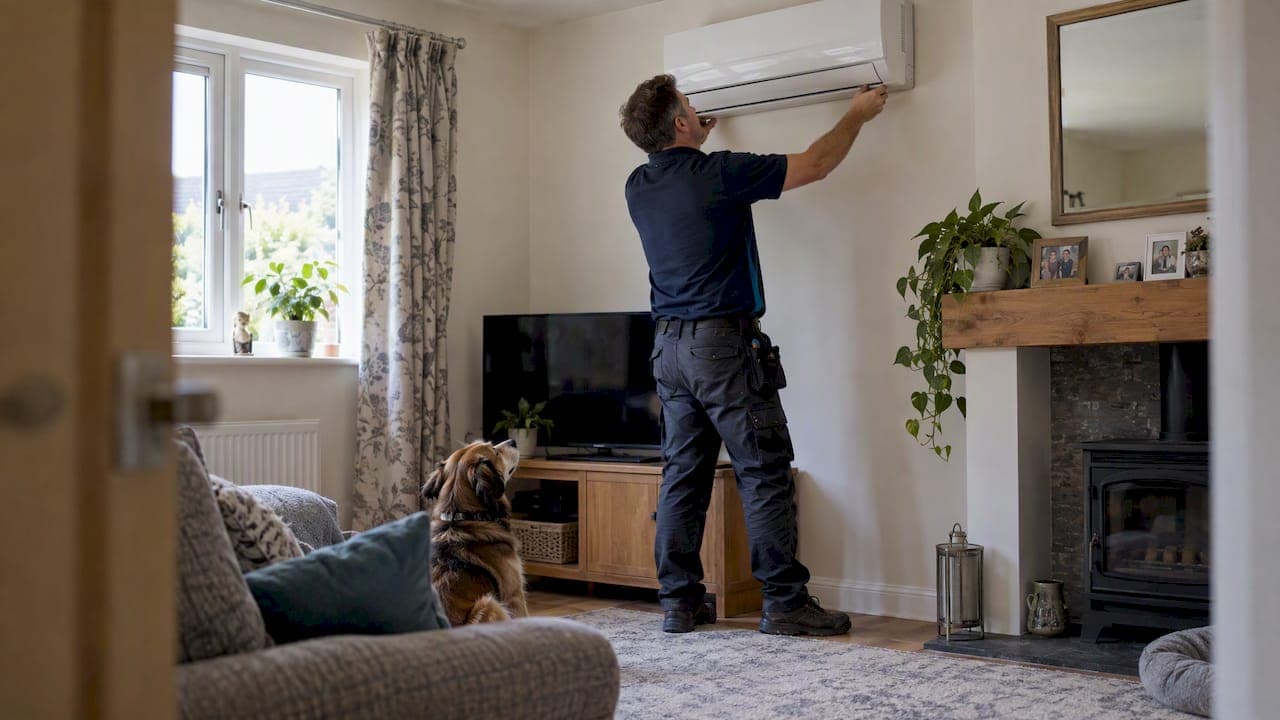
Air conditioning is safe for pets when used sensibly, and it is often an important tool for preventing heat-related illness. The Royal Veterinary College and Blue Cross both recommend airflow and cooling to manage heat risk. Keep indoor temperature and humidity moderate, supervise vulnerable animals, and if you spot signs of heatstroke, cool your pet immediately and call a vet.
TL;DR:
- Air conditioning lowers both temperature and humidity, which are critical factors that help dogs and cats dissipate heat more effectively.
- Portable units suit short-term or single-room cooling but struggle with long-term use in heatwaves, whereas fixed systems provide consistent conditions suitable for vulnerable pets.
- Immediately cooling a overheated pet involves moving them to shade, pouring lukewarm water over their coat, and seeking emergency veterinary care if severe symptoms persist.
- Mild heatstroke symptoms such as heavy panting and restlessness are common, but catching early signs significantly improves survival chances.
- Proper AC placement, gradual temperature adjustment, and regulated airflow are essential to keep pets comfortable without stress or startling noise.
Table of Contents
- How heat affects pets and what signs to watch for
- How air conditioning helps: temperature, humidity and airflow explained
- Practical pet-friendly AC use: placement, airflow, noise and daily routine
- Choosing between portable and fixed systems for homes with pets
- Immediate actions if a pet is overheating and when to contact a vet
- When to call an installer and how we help keep pets safe
- A short note from James on common pet-owner questions
- Safe installations, free surveys and how we can help
- FAQ
- Sources
- Primary sources and further reading
How heat affects pets and what signs to watch for
Dogs and cats cannot cool down the way we do. They have few sweat glands and rely mainly on panting to shed heat, which makes them far more vulnerable to warm, humid conditions than people realise. Some animals face even higher risk than others.
- Flat-faced breeds such as bulldogs and pugs struggle to pant efficiently because of their airway shape.
- Overweight pets carry extra insulation that traps heat.
- Very young and elderly animals regulate their temperature less effectively.
Early warning signs include heavy panting, restlessness and laboured breathing. According to VetCompass data from the RVC, Many mild heatstroke cases in dogs show respiratory changes such as laboured panting. Catching these early matters enormously: mild to moderate cases have a notably higher survival rate than severe cases, where survival rates are considerably lower. Spotting the signs early, rather than waiting for collapse, is what makes the difference between a close call and a tragedy.
How air conditioning helps: temperature, humidity and airflow explained

Air conditioning does two jobs that matter for pets: it lowers the ambient temperature and it reduces humidity. Lower humidity lets a panting animal's saliva and breath evaporate more efficiently, which is how dogs lose most of their body heat. According to the American Animal Hospital Association, reducing both temperature and humidity improves a pet's ability to offload heat, particularly for brachycephalic breeds that already struggle to pant effectively.
You don't need to chase extremes. A comfortable, steady indoor range works better than blasting the thermostat down to uncomfortable lows, which can shock a pet moving between rooms or stress older animals with joint pain.
- Aim for a stable, moderate indoor temperature rather than the coldest setting available.
- Pair cooling with gentle airflow so the effect reaches the pet, not just the room.
- If you're leaving a pet home alone on a hot day, a modest, consistent setting is safer than no cooling at all or a system left on an aggressive setting unsupervised.
Practical pet-friendly AC use: placement, airflow, noise and daily routine
Getting the setup right matters as much as having air conditioning at all. A few adjustments make any system genuinely pet-friendly.
- Angle louvres away from a pet's bed or favourite resting spot so cold air doesn't blow directly on them.
- Create a cooler zone in one room rather than trying to chill the whole house to the same degree.
- Use fan-only mode during milder spells and save full cooling for genuine heat.
- Introduce new settings gradually. Sudden, big temperature swings can unsettle anxious pets, especially nervous dogs and cats.
- Keep fresh water topped up throughout the day, as Blue Cross advises alongside limiting exercise during the hottest hours and grooming out matted fur that traps heat.
Noise is worth considering too. Older, louder units can startle sound-sensitive pets, so a quieter system or a lower fan speed often suits a multi-pet household better.
Pro Tip: Let a nervous pet explore the room with the AC running on its lowest setting before you rely on it during a genuine heatwave.

Choosing between portable and fixed systems for homes with pets
Portable units suit renters or anyone who needs to cool one room occasionally. They're cheaper upfront and need no structural work, but they require a vented hose to the outside, produce condensate that needs draining, and tend to struggle with sustained, all-day running in a heatwave.
Fixed split systems cost more to install but hold a steady temperature and humidity level far more reliably, run quieter over long periods, and don't need daily emptying or venting through a window.
- Choose portable if you need short-term, single-room cooling and don't want any installation work.
- Choose a fixed system if you have a vulnerable pet (brachycephalic, elderly or overweight) who needs consistent conditions every day.
- Factor in room size and insulation. A portable unit in a large, poorly insulated room will struggle regardless of its rated output.
When a fixed system is the right call, book an F-Gas and REFCOM certified engineer so the refrigerant handling and installation meet UK compliance standards.
Immediate actions if a pet is overheating and when to contact a vet
If you suspect heatstroke, speed matters more than anything else.
- Move your pet to shade or a cool room immediately.
- Pour cool, not ice-cold, water over their coat. Ice-cold water can cause blood vessels near the skin to constrict, which actually slows heat loss, according to RVC guidance.
- Direct a fan or air conditioning airflow over the damp coat to speed up evaporation.
- Offer small amounts of water once they're calmer, but never force it.
Call an emergency vet straight away if your pet collapses, shows severe breathing difficulty, or remains disorientated after initial cooling. The stakes of acting fast are real: VetCompass/RVC research found mild to moderate heatstroke cases survive around 95% of the time, compared with roughly 43% for severe cases caught late.
When to call an installer and how we help keep pets safe
Fans, shade and water handle mild warm spells, but a home with a vulnerable pet, a flat-faced breed, an elderly dog or a multi-pet household often needs the consistent temperature and humidity control that only a fixed system delivers reliably, day after day, without you managing it manually.
- Our systems are installed by certified engineers to ensure proper refrigerant handling and compliance.
- We offer finance options to help spread the cost of a fixed installation.
- Installation can be arranged quickly to get cooling in place promptly when needed.
Once a system is in, our aftercare guidance covers the cleaning and filter care that keeps air quality safe for pets long-term. A free survey is the simplest way to find out what your home needs; you can start one through our domestic installation page.
A short note from James on common pet-owner questions
Most of the questions we hear from pet owners aren't really about the equipment, they're about trust: will this be too cold, too loud, too sudden for my dog or cat? A well-placed, gradually introduced system solves that. But no unit replaces fresh water, shade and sensible timing around exercise. Equipment and behaviour work together, never one instead of the other.
— James
Safe installations, free surveys and how we can help
A fixed system installed properly gives you consistent control that portable units and fans simply can't match over a full summer, and for homes with a vulnerable pet, that consistency is what keeps conditions genuinely safe rather than just bearable.

- Our domestic installation service covers surveys, system design and fitting, usually completed within one to two days.
- Every engineer is F-Gas and REFCOM certified, so your installation meets UK refrigerant and safety standards.
- 0% finance is available, spreading the cost rather than requiring payment upfront.
A free survey is quick to arrange and lets us recommend a system suited to your home and household, pets included. Book one through our domestic installation page to see what a same-day fit could look like for you.
FAQ
Is there a pet air conditioner that can be used in a car?
Dedicated car-specific air conditioners for pets are not a standard, widely available product. Government guidance advises against leaving pets unattended in vehicles at all, since interior temperatures can become dangerous within minutes even with ventilation.
Can I use my air conditioner on my dog?
Yes, household air conditioning is safe for dogs when it cools the room to a moderate, steady temperature rather than blasting cold air directly at them. Angle the airflow away from their bed and introduce any new setting gradually so they aren't startled by a sudden change.
What is the 3 minute rule for aircon?
There is no established "3 minute rule" recognised in veterinary or air conditioning guidance for pets. If you've seen this mentioned elsewhere, treat it cautiously and rely instead on steady, moderate cooling combined with fresh water and shade.
What is the best mini air conditioner for pets?
The right choice depends on the room size and how long the unit needs to run, rather than any single product being universally best. For general guidance on compact systems suited to smaller spaces, our guide to air conditioning for small homes covers what to look for.
How do I know if my pet's cooling setup is actually safe?
Watch your pet's behaviour rather than just the thermostat. If they're panting heavily, restless or avoiding the cooled area entirely, the setup needs adjusting, whether that means repositioning airflow, lowering noise, or considering a pet-safe home painting refresh alongside broader pet-proofing when you're making home changes.
Sources
- Recognising early signs of heatstroke in dogs can save lives — VetCompass/RVC
- Heatstroke in dogs and cats - prevention, symptoms and first aid tips for pet owners — RVC
- Protecting the welfare of pet dogs and cats during journeys — GOV.UK
- How to keep dogs cool in the summer heat — Blue Cross
Primary sources and further reading
- Recognising early signs of heatstroke in dogs can save lives, VetCompass/RVC: survival data by heatstroke severity and early warning signs.
- Heatstroke in dogs and cats, RVC: first aid guidance on cooling and when to seek veterinary care.
- Protecting the welfare of pet dogs and cats during journeys, GOV.UK: official guidance on vehicle temperature risks.
- How to keep dogs cool in the summer heat, Blue Cross: practical daily cooling measures for dogs.
- Heatstroke in pets, AAHA: how temperature and humidity control supports thermoregulation.