
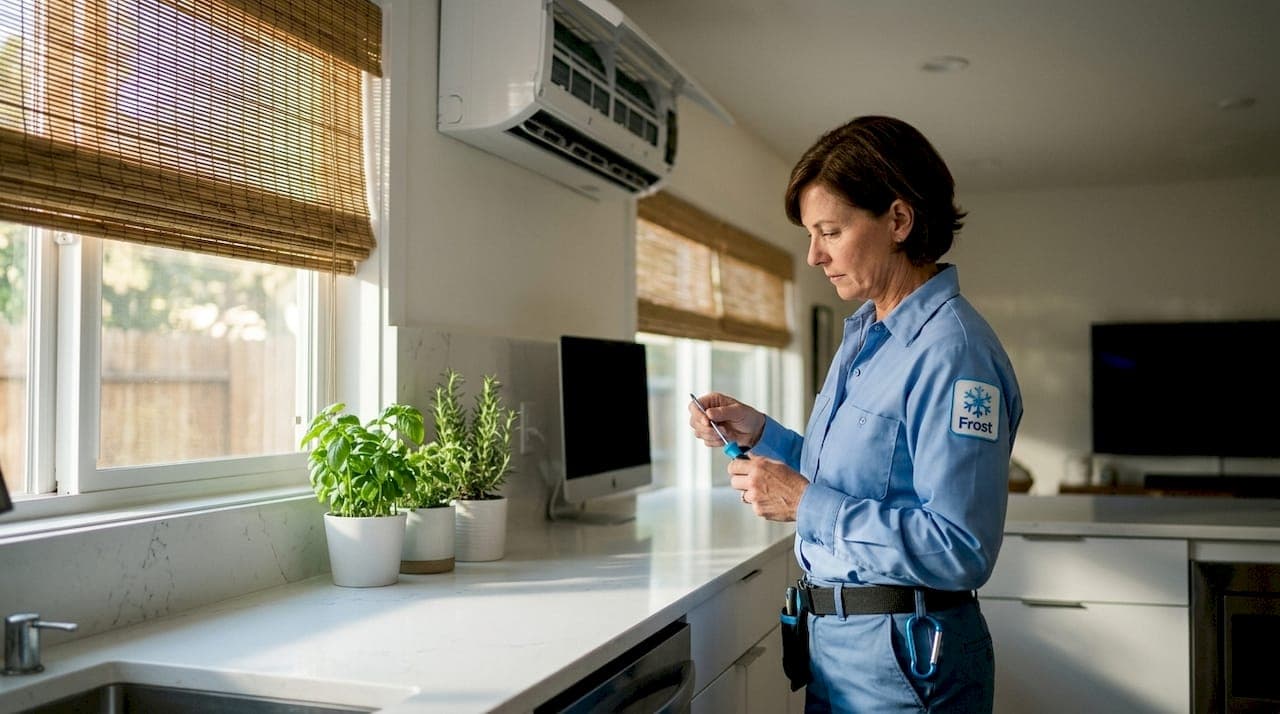
Air conditioning dehumidifies indoor air by cooling it below the dew point, which forces water vapour to condense on the evaporator coils and drain away. This is the air conditioning dehumidification process in plain terms. Dehumidification is a byproduct of cooling, not the system's primary job. The ideal indoor humidity range sits at 30–50% for comfort and health. Understanding how your air con removes moisture helps you get more from your system and avoid the damp, clammy feeling that catches many homeowners off guard.
How does air con dehumidify through evaporator coil cooling?
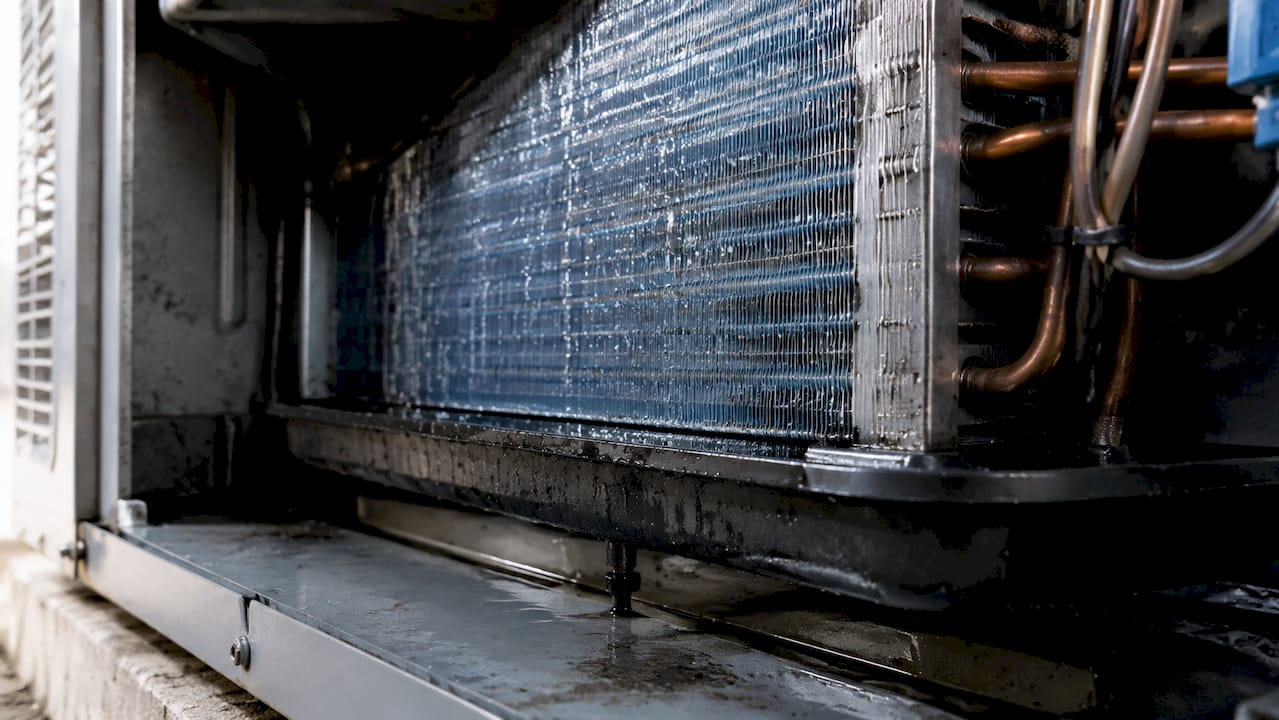
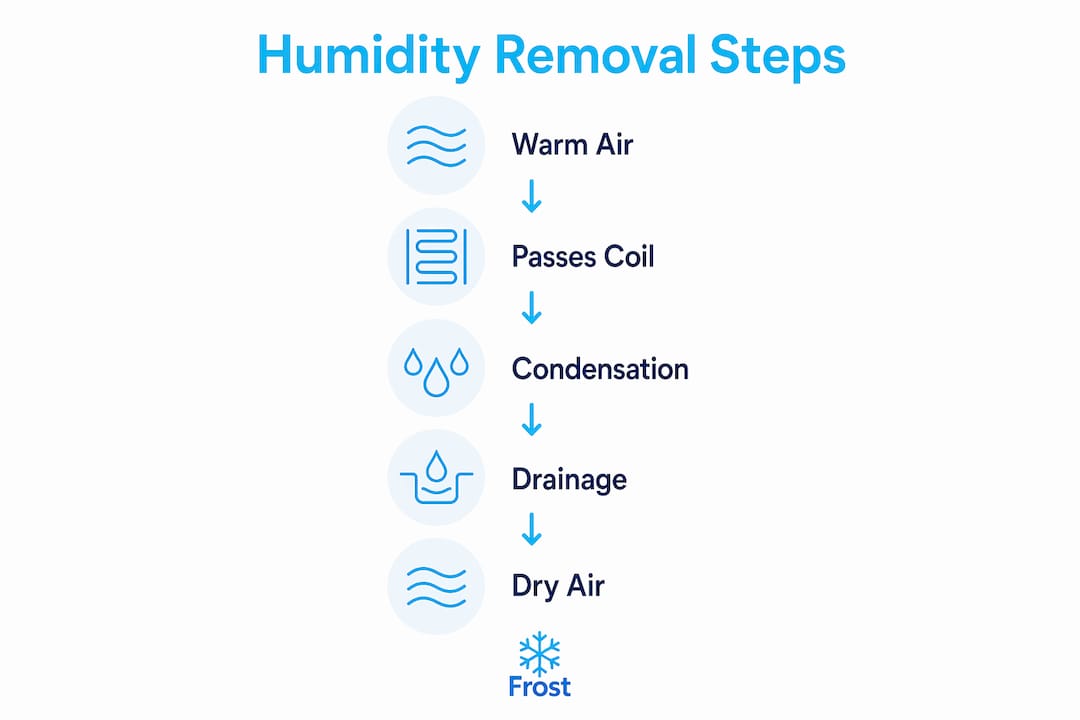
The evaporator coil is where all the moisture removal happens. Warm, humid indoor air passes over the coil, which is kept cold by refrigerant circulating inside it. When the air temperature drops below its dew point, water vapour can no longer stay suspended in the air. It condenses into liquid droplets on the coil surface, just like a cold glass of water sweats on a warm day.
Those droplets fall into a drain pan beneath the coil and exit the building through a condensate drain line. The air that continues into your rooms is now both cooler and drier. Properly sized systems can remove roughly 5 to 20 gallons of water per day, depending on system capacity and conditions. That volume represents a meaningful reduction in indoor relative humidity during hot weather.
The key physics principle here is simple. Colder air holds less moisture than warm air. Every degree the evaporator coil drops the air temperature, the air's capacity to hold water vapour shrinks. The result is lower relative humidity throughout your home. This is why air conditioning and air quality are so closely linked: drier air reduces the conditions that allow mould, dust mites, and bacteria to thrive.
Pro Tip: If you notice condensation forming on windows or walls while your air con is running, the system may be undersized or struggling to keep up. Check the drain pan under the indoor unit for standing water, which signals a blocked condensate line.
| Air temperature | Moisture the air can hold |
|---|---|
| 30°C | High capacity, humid feel |
| 22°C | Moderate capacity, comfortable |
| 15°C | Low capacity, noticeably drier |
| Below dew point | Condensation forms on surfaces |
What factors affect how well your air con removes humidity?
Correct sizing is the single biggest factor in AC humidity control. An oversized unit cools the room too quickly, then switches off before it has run long enough to pull significant moisture from the air. Effective dehumidification requires at least 15–20 minutes of continuous runtime. Short cycling leaves the air cool but still damp. You can read more about getting the sizing right in this guide to AC sizing for homeowners.
Your fan setting matters more than most people realise. Running the fan continuously on the "ON" setting keeps air moving even when the compressor has stopped. Setting the fan to "ON" evaporates condensate on the coils and blows that moisture back into your rooms, undoing the dehumidification work. Switching to "AUTO" stops the fan when the compressor stops, allowing condensate to drain properly.
Several other variables affect performance:
- Dirty evaporator coils. A layer of dust and grime insulates the coil surface, reducing its ability to cool air below the dew point.
- Blocked condensate drain lines. If the drain line is clogged, water backs up and can overflow rather than exit the building.
- Low refrigerant levels. If refrigerant drops, coils cannot cool properly and condensation reduces significantly. This requires an F-Gas certified engineer to diagnose and fix.
- Shoulder season running time. During mild spring or autumn weather, the system runs less often. Less runtime means less moisture removal, which is when indoor humidity can creep up.
- Climate and ventilation. Homes with poor draught sealing constantly draw in humid outdoor air, giving the system more moisture to fight.
Pro Tip: Set your thermostat fan to "AUTO" today if it is currently on "ON". This single change resolves a large proportion of humidity complaints without any other adjustment.
How does AC dehumidification compare to a dedicated dehumidifier?
Air conditioning removes moisture only when it is actively cooling. On a mild day when the temperature is comfortable, the system may barely run, and air conditioners can reduce humidity by 20–30% during hot weather but cycle off early in milder conditions, leaving moisture levels higher than ideal. That is the core limitation.
A dedicated dehumidifier operates independently of temperature. It runs whenever humidity exceeds a set level, regardless of whether the room needs cooling. Dedicated whole-home dehumidifiers can extract up to 70–130 pints of water per day, compared to the 10–20 pints a typical central AC unit removes as a byproduct of cooling. That difference is substantial in a persistently damp home.
| Feature | Air conditioner | Dedicated dehumidifier |
|---|---|---|
| Primary function | Cooling | Moisture removal |
| Operates without cooling? | No | Yes |
| Daily moisture removal | 10–20 pints (typical) | Up to 70–130 pints |
| Best season | Hot summer months | Year-round, including mild weather |
| Temperature control | Yes | No |
The practical conclusion is straightforward. For most UK homes during summer, an air conditioner handles humidity well as part of its cooling function. For homes with persistent dampness, ground floor flats, or rooms with poor ventilation, a dedicated dehumidifier fills the gap the AC cannot. The two work well together rather than in competition.
What can you do to get better dehumidification from your air con?
Getting the most from your system's moisture removal comes down to a handful of consistent habits and the right setup choices.
-
Set the fan to "AUTO". This is the most impactful single change. Most humidity problems related to AC arise from fan settings, and "AUTO" mode allows condensate to drain rather than re-evaporate.
-
Check your system sizing. If your unit cools the room in under ten minutes and then switches off, it is likely oversized. A correctly sized system runs in longer cycles and removes far more moisture per hour of operation.
-
Clean the evaporator coils and drain line annually. Dirty coils and blocked drains are the two most common maintenance faults that reduce moisture removal. A professional service visit covers both.
-
Use Dry Mode when available. Dry Mode slows the fan speed to maximise air contact time with the cold coils, pulling out more moisture while barely changing the room temperature. This is particularly useful during mild weather when you do not need full cooling.
-
Consider a variable capacity or inverter system. Variable speed systems run longer at lower speeds, providing steadier and more consistent dehumidification than single-stage units that blast on and off. They also use less energy over the course of a day.
-
Maintain a steady temperature when the property is vacant. Keeping AC running moderately during absence prevents mould and microbial growth inside ducts and coils, which would otherwise spike humidity when the system restarts.
-
Call a professional when performance drops. Reduced cooling, ice forming on the coil, or a musty smell from the vents all point to issues that need an F-Gas certified engineer. Attempting refrigerant work without certification is illegal in the UK.
Pro Tip: If your home feels humid even with the air con running, check whether the drain line exits freely outside. A partially blocked line is often the culprit and can be cleared with a wet-dry vacuum in minutes.
Key takeaways
Air conditioning removes moisture by cooling air below the dew point, but performance depends heavily on correct sizing, fan settings, and regular maintenance.
| Point | Details |
|---|---|
| Dew point condensation | Moisture condenses on cold evaporator coils and drains away, lowering indoor humidity. |
| Fan setting matters | Setting the fan to "AUTO" prevents condensate from re-evaporating and returning to the room. |
| Sizing affects runtime | Oversized units short cycle and remove far less moisture than correctly sized systems. |
| AC has limits | Dedicated dehumidifiers remove significantly more moisture and operate independently of temperature. |
| Maintenance is critical | Dirty coils and blocked drain lines directly reduce the system's ability to remove humidity. |
What I have learned about AC and humidity after years in the field
The most common misconception I encounter is that air conditioning is a full dehumidifier. Homeowners buy a system, set it to cool, and expect the humidity problem to disappear. When the air still feels clammy in october, they assume the unit is faulty.
Nine times out of ten, the fan is set to "ON". That one setting undoes hours of moisture removal every day. I have walked into homes where the unit was working perfectly but the fan was redistributing condensate back into the air continuously. Switching to "AUTO" fixed the problem in seconds.
The second most common issue is oversizing. Bigger does not mean better with air conditioning. A unit that is too powerful for the room cools it too fast, never runs long enough to pull real moisture out, and leaves the air feeling cold and damp at the same time. Proper sizing, as Frostairconditioning always emphasises, is not optional. It is the foundation of everything else.
My honest recommendation for anyone in a persistently damp home, particularly ground floor properties or older builds in the South West, is to pair a well-sized inverter AC with a standalone dehumidifier for the shoulder months. The AC handles summer. The dehumidifier handles the rest. Together, they keep indoor air quality where it should be year-round.
— James
Frostairconditioning: professional installation and maintenance in the South West
Getting the dehumidification benefits from your air conditioning system starts with the right installation. An incorrectly sized or poorly fitted unit will always underperform on moisture removal, no matter how well you manage the settings.

Frostairconditioning installs domestic air conditioning systems across Exeter and the wider South West, with same-day installs available and 0% finance options to spread the cost. Every installation is carried out by F-Gas certified engineers who size the system correctly for your space from the outset. Frostairconditioning also offers ongoing service maintenance to keep evaporator coils clean and condensate drain lines clear, so your system continues to remove moisture efficiently season after season.
FAQ
How does air con remove moisture from a room?
Air conditioning draws warm, humid air over cold evaporator coils. When the air temperature drops below the dew point, water vapour condenses on the coil surface, drips into a drain pan, and exits the building through a condensate line.
Does air con dehumidify as well as a dedicated dehumidifier?
No. A typical central AC unit removes 10–20 pints of moisture per day as a byproduct of cooling, while a dedicated dehumidifier can extract up to 70–130 pints per day and operates independently of temperature.
Why does my home still feel humid with the air con on?
The most likely cause is the fan being set to "ON" rather than "AUTO". This setting evaporates condensate on the coils and blows moisture back into the room. Switching to "AUTO" resolves the majority of humidity complaints.
What is Dry Mode on an air conditioner?
Dry Mode reduces fan speed to slow airflow over the cold coils, maximising condensation and moisture removal while keeping the room temperature relatively stable. It is most useful during mild weather when full cooling is not needed.
How often should I service my air con to maintain good humidity control?
An annual service is the standard recommendation. A professional engineer will clean the evaporator coils, clear the condensate drain line, and check refrigerant levels, all of which directly affect the system's ability to remove moisture.