

An air conditioning warranty is a legal contract that guarantees the repair or replacement of specified parts under defined conditions and timeframes. Most manufacturer warranties cover key components like compressors and coils for 5–10 years, while labour warranties from installers typically last just 1–2 years. Understanding AC warranties before you need them is the difference between a covered repair and an unexpected bill running into hundreds of pounds. Frostairconditioning works with homeowners across the South West to ensure every installation comes with clear warranty guidance from day one.
What types of air conditioning warranties exist?
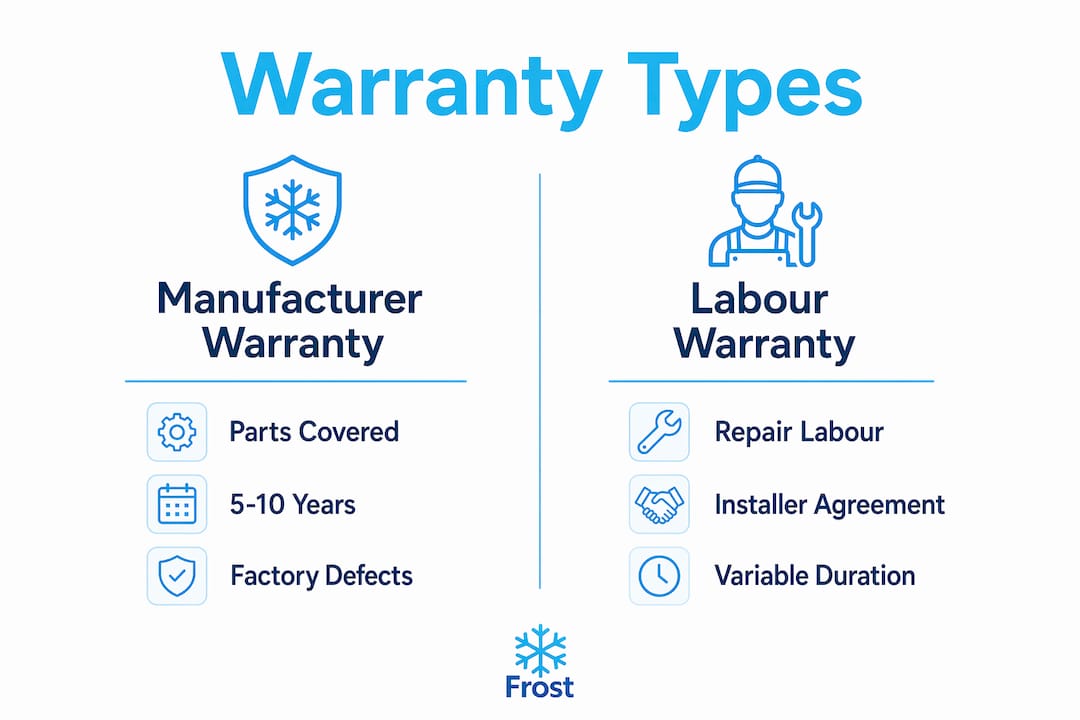
Manufacturer parts warranties typically last 5–10 years and cover factory defects in components like compressors, coils, and circuit boards. They do not cover the cost of a technician's time. That distinction catches many homeowners off guard when their first repair bill arrives.

Labour warranties are separate agreements made directly with your installer. They cover the technician's time for repairs and usually run for just 1–2 years. Because they are private contracts rather than manufacturer guarantees, they depend entirely on your installer remaining in business and honouring the agreement.
Extended warranties fill the gap left by shorter manufacturer and labour terms. Extended warranty plans typically cost £400–£1,200 and provide additional parts and labour coverage beyond the original manufacturer period. They are worth considering if you want protection against large repair bills once the standard warranty expires.
Home warranty plans are a fourth category that homeowners sometimes confuse with manufacturer warranties. A home warranty is an annual service contract covering wear and tear across multiple home systems, including plumbing, electrics, and heating, not just your air conditioning unit. Manufacturer warranties cover factory defects, while home warranties cover the gradual deterioration that comes with normal use. The two serve different purposes and can work alongside each other.
Here is a quick comparison of the four main warranty types:
| Warranty type | What it covers | Typical duration |
|---|---|---|
| Manufacturer parts | Factory defects in components | 5–10 years |
| Labour (installer) | Technician time for repairs | 1–2 years |
| Extended warranty | Parts and labour beyond original terms | Varies by plan |
| Home warranty plan | Wear and tear across home systems | Annual renewal |
How does warranty registration affect your coverage?
Registration is the single most overlooked step in air conditioning warranty terms. Most manufacturers require registration within 60–90 days of installation to unlock the full warranty period. Miss that window and your parts coverage drops from 10 years to around 5 years automatically.
That reduction carries a real financial cost. Failing to register can leave homeowners facing £300–£1,000 or more in out-of-pocket repair costs that would otherwise have been covered. A compressor replacement alone can cost well over £500 in parts.
The responsibility for registration sits with the homeowner, not the installer. Your installer should hand you the registration details at the point of installation, but the act of submitting them is yours to complete. Do not assume it has been done on your behalf.
Ongoing maintenance is equally critical. Without dated records of annual servicing, manufacturers can deny claims even when the fault is a genuine factory defect. Keep every service invoice in a dedicated folder, physical or digital, and note the date, engineer name, and work carried out.
Pro Tip: Register your warranty the same day your unit is installed. Take a photo of the registration confirmation and store it alongside your installation paperwork.
The records you need to keep include:
- Proof of purchase and installation date
- Installer's name, company, and F-Gas certification number
- Annual service invoices with dates and engineer details
- Any correspondence with the manufacturer about your warranty
For a full guide on what to do after installation, the aftercare guide from Frostairconditioning covers maintenance steps that keep your warranty valid.
What exclusions and pitfalls should homeowners watch for?
Manufacturer warranties read like legal contracts because they are. Warranties frequently exclude refrigerant leaks caused by poor connections, damage from improper installation, and any fault linked to a lack of documented annual maintenance. Each of those exclusions is a common real-world scenario, not an edge case.
All manufacturer warranties require licensed professional installation. If an unlicensed contractor fits your unit, the warranty is void from day one, even if the installation itself is technically correct. This is why choosing an F-Gas certified installer matters beyond just legal compliance.
Refrigerant costs and technician travel are two expenses that regularly surprise homeowners. Refrigerant top-ups and travel costs are typically excluded from manufacturer warranties. Ask your installer directly whether their labour agreement covers these items before you sign anything.
The labour warranty carries its own specific risk. If your installer ceases trading, the labour warranty disappears with them. There is no central register or transfer mechanism. This makes the financial stability and reputation of your installer a genuine factor in your long-term warranty protection.
Pro Tip: Ask your installer to confirm the labour warranty terms in writing before installation begins. A reputable contractor will have no hesitation providing this.
Common exclusions to check in your warranty document:
- Damage caused by improper installation or unlicensed work
- Refrigerant leaks from connection faults rather than component failure
- Repairs needed due to lack of annual professional servicing
- Technician travel time and call-out fees
- Refrigerant recharging costs
Understanding key AC terminology helps you read warranty documents with confidence and spot exclusions before they catch you out.
How do extended warranties compare with home warranty plans?
Choosing between a manufacturer warranty, an extended warranty, and a home warranty plan comes down to what risks you want to cover and for how long. Each layer of protection addresses a different scenario.
A manufacturer warranty is your baseline. It covers factory defects in specific components for a fixed period and costs you nothing beyond the purchase price of the unit. Its limitation is that it excludes labour, wear and tear, and anything caused by installation or maintenance failures.
An extended warranty picks up where the manufacturer warranty ends. It typically adds several years of parts and labour coverage and is purchased either at the point of installation or before the original warranty expires. The cost varies by provider and system size, but it provides predictable repair costs during the years when components are most likely to show age-related faults.
A home warranty plan operates differently. It is an annual contract, renewed each year, that covers multiple home systems under one agreement. Home warranty plans cost hundreds annually and cover wear and tear rather than factory defects. They suit homeowners who want a single policy covering their boiler, plumbing, and air conditioning together, rather than managing separate agreements.
The right combination depends on your circumstances. A newer property with a freshly installed system may need only the manufacturer warranty and a solid labour agreement for the first few years. An older property with an ageing system may benefit from a home warranty plan that covers multiple potential failure points simultaneously. For guidance on compressor warranty specifics, which is the most expensive component in any AC system, it is worth reading up before making a decision.
Key takeaways
Air conditioning warranties are legal contracts with specific conditions, and missing registration deadlines or maintenance requirements can void coverage and cost homeowners hundreds of pounds in avoidable repair bills.
| Point | Details |
|---|---|
| Register within 60–90 days | Missing the registration window cuts parts coverage from 10 years to 5 years. |
| Labour warranty is a private contract | If your installer closes, labour coverage disappears with them. |
| Annual maintenance records are mandatory | Keep dated service invoices or manufacturers can deny claims for genuine defects. |
| Licensed installation is non-negotiable | Unlicensed installation voids the manufacturer warranty entirely, regardless of quality. |
| Extended and home warranties serve different needs | Extended warranties add years of cover; home plans cover wear and tear across multiple systems. |
What I have learned from years of warranty conversations
The most common mistake I see homeowners make is treating the warranty document as something to file away and forget. They assume the installer has handled registration, assume annual servicing is optional, and assume the warranty covers everything. None of those assumptions hold up.
The registration deadline is the one that costs people the most. A homeowner who misses the 60–90 day window through no fault of their own, perhaps because the paperwork was unclear or the installer did not flag it, can lose five years of parts coverage on a unit that cost thousands of pounds. That is a significant financial exposure for something that takes ten minutes to sort out on the day of installation.
I also think homeowners underestimate how much the choice of installer shapes their warranty protection. A licensed, F-Gas certified installer does not just fit the unit correctly. They provide documentation that satisfies manufacturer requirements, give you a valid labour agreement in writing, and remain accountable if something goes wrong. An unlicensed installation voids the manufacturer warranty before the unit has run a single cycle.
My honest advice is to treat your warranty like a financial product, not a piece of paper. Read the exclusions. Keep the records. Register on day one. And choose an installer whose business you trust to still be operating in five years' time.
— James
Frostairconditioning and your warranty from day one
Getting your warranty right starts with the installation itself. Frostairconditioning is F-Gas certified and covers the South West, including Exeter and surrounding areas, with same-day installs available and 0% finance options to spread the cost.

Every domestic installation carried out by Frostairconditioning uses licensed engineers whose work satisfies manufacturer warranty requirements from the outset. The team also supports homeowners with warranty registration guidance and ongoing service maintenance plans that keep annual servicing records in order. If you want to protect your investment properly, request a quote and speak to the team about the right system and warranty package for your home.
FAQ
How long do air conditioning warranties last?
Manufacturer parts warranties typically last 5–10 years, covering factory defects in components like compressors and coils. Labour warranties from installers usually last just 1–2 years and are separate agreements.
What happens if I do not register my AC warranty?
Failing to register within 60–90 days of installation reduces your parts coverage from 10 years to around 5 years. That reduction can leave you facing significant out-of-pocket repair costs for faults that would otherwise have been covered.
Does a manufacturer warranty cover labour costs?
No. Manufacturer warranties cover the cost of replacement parts only. Labour costs are covered by a separate agreement with your installer, which is why confirming those terms in writing before installation matters.
What voids an air conditioning warranty?
Common causes include unlicensed installation, refrigerant leaks from poor connections, and failure to provide proof of annual professional maintenance. Missing the registration deadline also reduces coverage significantly.
What is the difference between an extended warranty and a home warranty plan?
An extended warranty adds years of parts and labour coverage beyond the manufacturer's original terms. A home warranty plan is an annual contract covering wear and tear across multiple home systems, renewed each year, and is distinct from manufacturer or extended warranty coverage.