
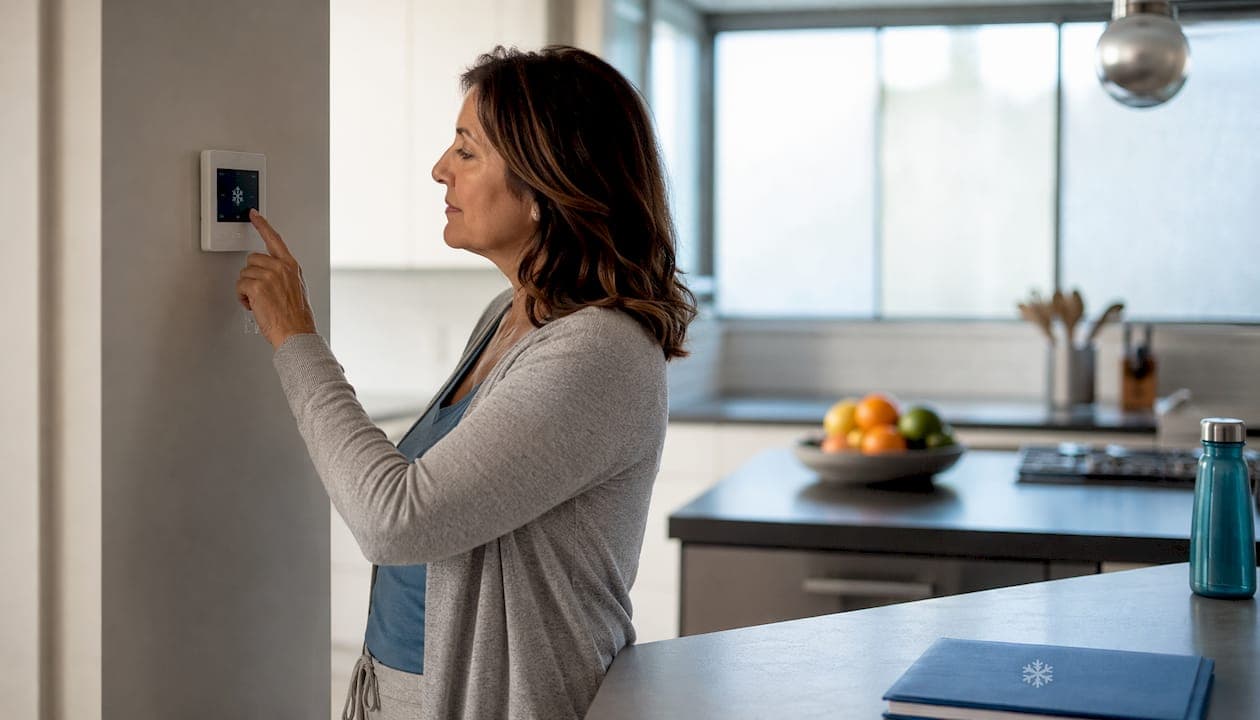
The best practices for AC use centre on one core principle: keep your thermostat at around 26°C when you are home, raise it by 4–6°C when you are away, and maintain your system regularly. These three habits alone can cut your cooling bills by up to 10% annually and prevent the majority of breakdowns before they happen. Homeowners who follow structured AC cooling optimisation techniques spend less on repairs and stay more comfortable throughout the warm months. Frostairconditioning works with homeowners across the South West every summer, and the same avoidable mistakes come up again and again.
1. What thermostat settings optimise comfort and savings?
The ideal thermostat setting for most homeowners is around 26°C when you are at home. Each degree above 22°C saves roughly 3% on your energy bill, so small adjustments add up quickly over a summer.
When you leave the house for eight hours or more, raise the thermostat by 4–6°C. That single habit saves up to 10% annually on cooling costs. The system does not have to work as hard to recover a modest temperature difference as it does to cool a house that has been baking all afternoon.

Comfort is subjective. Start at 26°C and adjust one degree at a time until you find the highest temperature that still feels comfortable. Gradual changes help you adapt rather than defaulting to a colder setting out of habit.
Humidity plays a bigger role than most homeowners realise. A room at 26°C with low humidity feels cooler than a room at 24°C with high humidity. Running your AC at a moderate temperature also removes moisture from the air, which improves comfort without dropping the thermostat further.
- Set to 26°C when at home for the best balance of comfort and efficiency.
- Raise by 4–6°C for any absence of eight hours or more.
- Never drop the thermostat below 20°C. It does not cool the room faster and wastes energy.
- Adjust gradually. One degree at a time lets you find your actual comfort threshold.
Pro Tip: If you find 26°C too warm at first, try it for three days before adjusting. Your body acclimatises faster than you expect, and you may find you never need to go lower.
2. How does regular maintenance improve efficiency?
Changing your air filter every 30–90 days improves energy efficiency by up to 15% and prevents 85% of breakdowns. A clogged filter forces the system to work harder, raises your bills, and shortens the unit's lifespan. This is the single highest-return maintenance task a homeowner can do.
A professional tune-up before summer starts catches problems before they become failures. Engineers check refrigerant levels, electrical connections, and coil condition. Booking a service in spring means you are not competing for appointments when the heat arrives.
- Replace air filters every 30–90 days, or monthly if you have pets or live in a dusty area.
- Clear the condensate drain line using a wet-dry vacuum or a flush of diluted vinegar to prevent blockages that cause leaks and system shutdowns.
- Clean condenser coils on the outdoor unit at the start of each cooling season.
- Check and clear return air registers monthly to keep airflow unrestricted.
- Replace thermostat batteries annually. Weak batteries cause inaccurate readings and inconsistent operation, which wastes energy without you noticing.
Pro Tip: Set a recurring calendar reminder on the first day of each month to check your filter. It takes two minutes and is the cheapest form of AC maintenance available.
Thermostat placement also matters. A thermostat near a sunny window or a heat-generating appliance reads a false high temperature and runs the system longer than necessary. If yours is poorly placed, a qualified engineer can relocate it during a service visit.
3. What supplementary methods enhance AC efficiency?
Ceiling fans are the most underused tool in home cooling. They create a wind chill effect that makes a room feel up to 4°F cooler, which means you can raise your thermostat setting without noticing the difference. The fan itself uses a fraction of the energy an AC unit does.
Blocking sunlight is equally effective. Closing blinds and curtains on south and west-facing windows during the hottest part of the day reduces heat gain significantly. Thermal or blackout curtains perform better than standard fabric, and the difference in room temperature is noticeable within an hour.
- Use ceiling fans in occupied rooms to allow a higher thermostat setting.
- Close blinds on sun-facing windows between 11:00 AM and 4:00 PM.
- Open windows on cooler nights when outdoor humidity is low. Natural ventilation gives the AC system a rest.
- Avoid using ovens, tumble dryers, or dishwashers during peak afternoon heat. These appliances generate heat that your AC then has to remove.
- A smart thermostat automates temperature adjustments based on your occupancy patterns, saving around 10% on energy without any manual effort.
Smart thermostats learn when you are typically home and away, then adjust temperatures accordingly. You can also control them remotely, so you can cool the house down before you arrive rather than walking into a hot room and blasting the AC at full power.
4. How to maximise airflow and avoid common mistakes
Keeping the outdoor unit clear is non-negotiable. The condenser needs at least 45–60 cm of clear space on all sides to exchange heat properly. Overgrown shrubs, garden furniture, or debris piled against the unit restrict airflow and force the compressor to work harder.
Bent condenser fins reduce heat exchange efficiency and increase electricity consumption. A fin comb, available from most hardware shops, straightens them in minutes. This is a quick job that most homeowners overlook entirely.
- Keep 45–60 cm of clearance around the outdoor unit at all times.
- Straighten bent condenser fins with a fin comb each spring.
- Keep all supply vents open. Closing vents in unused rooms creates pressure imbalances that cause duct leaks and coil freezing.
- Set the thermostat fan to "Auto" rather than "On." The "On" setting runs the fan continuously, circulating humid air and raising indoor moisture levels.
- Clean return air registers with a damp cloth monthly. Dust build-up restricts the air your system draws in.
| Setting | Correct choice | Why it matters |
|---|---|---|
| Fan mode | Auto | Prevents unnecessary humidity circulation |
| Supply vents | All open | Avoids pressure imbalance and coil freeze |
| Outdoor clearance | 45–60 cm | Allows proper heat exchange |
| Filter replacement | Every 30–90 days | Maintains airflow and efficiency |
A common mistake is closing vents in spare bedrooms to "save energy." The system is sized for the whole house. Closing vents does not reduce the load. It creates back-pressure that stresses the ductwork and can freeze the evaporator coil, causing a breakdown.
5. When should you consider upgrading your AC unit?
An ageing AC unit costs more to run every year. Older systems carry lower SEER2 and EER2 ratings, which are the industry-standard measures of cooling efficiency. Newer units with higher SEER2 ratings can be up to 15% more efficient than models from ten or more years ago.
Multi-speed and variable-speed systems offer a further advantage. They modulate output to match the actual cooling demand rather than cycling on and off at full power. This delivers more consistent temperatures, better humidity control, and lower running costs.
- If your unit is over ten years old and requires frequent repairs, replacement is likely cheaper over three years than continued servicing.
- Check the SEER2 rating of any replacement unit. A higher number means lower running costs.
- Consider your home's insulation before upgrading. A new unit in a poorly insulated house will still struggle. Addressing loft insulation and draught-proofing first improves the return on any new installation.
- Plan upgrades in late winter or early spring. Availability is better, lead times are shorter, and you avoid the summer rush.
- Frostairconditioning offers same-day domestic installs across the South West, with 0% finance available, so upfront cost does not have to be a barrier.
Key takeaways
The most effective approach to AC use combines a 26°C thermostat setting at home, a 4–6°C rise when away, monthly filter checks, and supplementary cooling methods such as ceiling fans and shading.
| Point | Details |
|---|---|
| Thermostat setting | Set to 26°C at home; raise by 4–6°C for absences over eight hours to save up to 10% annually. |
| Filter maintenance | Replace filters every 30–90 days to improve efficiency by up to 15% and prevent most breakdowns. |
| Supplementary cooling | Ceiling fans and closed blinds allow a higher thermostat setting without sacrificing comfort. |
| Vent management | Keep all supply vents open to prevent pressure imbalances, coil freezing, and duct leaks. |
| Upgrade timing | Plan unit replacements in spring; newer SEER2-rated systems can cut running costs by up to 15%. |
What I have learned from years of AC installs in the South West
The most persistent misconception I encounter is that switching the AC off completely when you leave the house saves the most money. It does not. Turning AC off for extended periods increases wear on the compressor and, in humid conditions, allows moisture to build up indoors. Raising the thermostat is always the better call.
The second thing I see constantly is homeowners running their systems at 18°C or 19°C because they assume colder is faster. The unit cools at the same rate regardless of the target temperature. All you are doing is running it longer and paying more.
What actually works is boring but consistent: a sensible thermostat setting, a clean filter, and a clear outdoor unit. Homeowners who do those three things reliably spend far less on repairs and energy than those who chase quick fixes. I would also strongly encourage anyone without a smart thermostat to consider one. The automatic temperature adjustments remove the human error element entirely, which is where most of the waste comes from.
One final point on indoor air quality: running your AC at a moderate temperature also manages humidity better than running it cold and short-cycling. Consistent, moderate operation keeps moisture levels stable and reduces the conditions that allow mould to develop. That matters as much as the energy bill.
— James
How Frostairconditioning helps homeowners stay cool and efficient
Knowing the right habits is one thing. Having the right system and the right support behind it is another.
Frostairconditioning installs and services residential air conditioning systems across Exeter and the wider South West. Whether you need a new unit fitted or want to keep your existing system running at its best, the team offers professional service and maintenance plans designed around your home. All engineers are F-Gas certified, same-day installs are available, and 0% finance means you can act before the summer heat arrives rather than after. Request a quote to find out what the right solution looks like for your home.
FAQ
What is the best thermostat setting for AC in summer?
Set your thermostat to around 26°C when you are at home. Raise it by 4–6°C when you leave for eight hours or more to save up to 10% annually on cooling costs.
How often should I change my AC filter?
Replace your air filter every 30–90 days under normal conditions, or monthly if you have pets or a dusty home. Regular filter changes improve efficiency by up to 15%.
Should I turn my AC off when I leave the house?
Turning AC off completely can increase compressor wear and allow humidity to build up indoors. Raising the thermostat by 4–6°C is more efficient and protects the system.
Do ceiling fans reduce AC running costs?
Yes. Ceiling fans create a wind chill effect that makes a room feel cooler, allowing you to raise your thermostat setting without discomfort. They use far less energy than an AC unit.
When should I replace my AC unit?
Consider replacing a unit that is over ten years old, requires frequent repairs, or carries a low SEER2 rating. Newer systems can be up to 15% more efficient and offer better humidity control.