
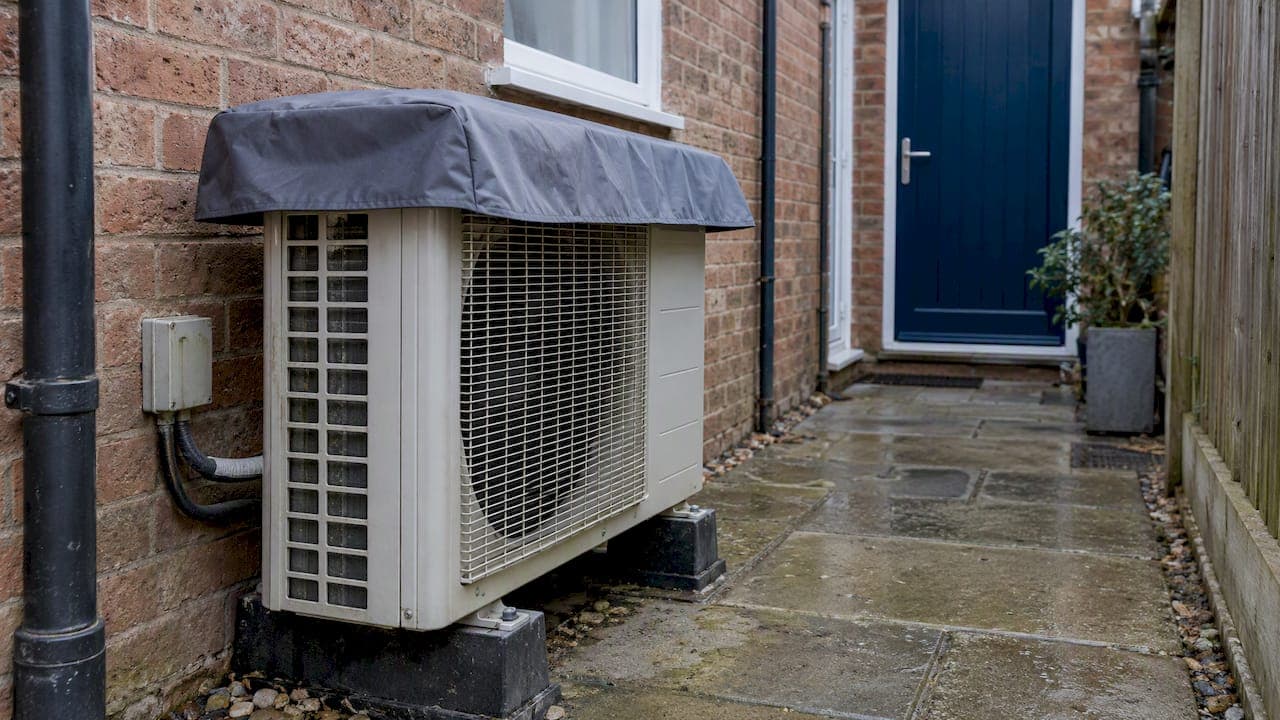
Most outdoor air conditioning units in the UK do not need a full cover over winter, and fitting one can create more problems than it solves. Modern units are built to handle rain, frost and wind, and sealing them under plastic or fabric traps moisture against the casing. There are a few exceptions worth knowing, and some sensible prep steps that matter far more than a cover.
TL;DR:
- Use a cover only where snow drift, falling ice, or coastal salt spray threatens the unit, and choose breathable mesh or plywood with open sides.
- Before winter, switch off the unit, clear leaves and debris from its coils and base, and keep roughly 60 centimeters of open space around it.
- Fit any cover only after seasonal use ends, inspect it after storms, and remove it before a mild spell or unexpected cooling is needed.
- Call an engineer for suspected refrigerant leaks, damaged fins, nesting inside the casing, or storm damage; UK rules reserve refrigerant work for certified personnel.
Table of Contents
- Why full covers usually do more harm than good
- When covering can be justified and safe cover options
- Winter preparation checklist homeowners can do instead of covering
- How to fit and remove a top-only or breathable cover safely
- When to call a professional and UK regulatory notes
- A local installer's view on winter cover habits
- Book a pre-winter check with Frost Air Conditioning
- FAQ
- Sources
Why full covers usually do more harm than good
Wrapping an outdoor unit tightly in plastic or heavy fabric seems protective, but it works against the equipment rather than for it. HVAC experts widely advise against fully wrapping outdoor units, because a sealed cover stops normal airflow and traps the condensation that naturally forms inside the cabinet. That trapped moisture has nowhere to go, so it sits against metal components and speeds up corrosion rather than preventing it.
A few specific risks come up again and again with full covers:
- Trapped condensation builds up inside a sealed cabinet and accelerates rust on coils and fittings.
- Blocked airflow stops coils drying out properly between frosty spells, which wears components faster.
- Pest nesting becomes more likely once a unit is sheltered and undisturbed under thick fabric.
- Warranty concerns arise because manufacturers generally design units for year-round outdoor exposure, not for being sealed shut.
The pattern experts describe is consistent: the real winter threat is debris and neglect, not cold air itself, and a tight cover often turns a non-problem into a real one.
When covering can be justified and safe cover options
There are genuine exceptions where some protection helps. Heavy snow drift, falling ice from guttering above, or an exposed coastal spot with salt spray can all justify a limited cover, and climate and site exposure are the deciding factors rather than cold alone.
When protection is warranted, keep it simple:
- Use a top-only cover that shields the cabinet from above while leaving the sides open.
- Choose a breathable mesh cover if you want fabric protection, never a solid plastic sheet.
- Fit a plywood deflector over the top as a cheap, effective barrier against snow and ice fall.
Avoid plastic tarpaulins, bin bags or tight sack-style covers that seal the cabinet entirely, since these are exactly what cause the moisture and corrosion problems described above.
Pro Tip: Only fit any cover once the unit has stopped running for the season, and take it off well before the first mild spell in case you need cooling again.
Winter preparation checklist homeowners can do instead of covering
Most of what protects a unit over winter has nothing to do with covers. A short maintenance routine before the cold sets in does far more good.
- Switch off and clean the coils. Clear leaves, grass cuttings and general debris from the fins and base while the unit is off.
- Check clearance around the unit. Trim back shrubs and plants to keep roughly 60 centimetres of open space, which keeps airflow unrestricted and reduces leaf build-up through autumn.
- Inspect drainage and condensate paths. Make sure the condensate line is not blocked, and raise the unit onto a stand if it sits somewhere prone to flooding or heavy snowdrift.
- Apply a coil-safe anti-corrosion spray if the fins show early rust spots, but stop there. Refrigerant lines, electrical connections and anything inside the cabinet are not DIY territory.
Clearing the surrounding area is worth doing properly rather than rushing. Our winter care guide for air conditioners covers the same seasonal steps in more depth, and general autumn garden cleanup advice is useful if leaf fall around the unit is heavy.
One of the more consistent findings from HVAC advisory guidance is that debris and poor maintenance cause more winter damage than cold temperatures themselves, according to industry commentary on covering outdoor units. A clean, clear unit going into December tends to come out the other side in far better shape than a sealed one.
How to fit and remove a top-only or breathable cover safely
If you decide a cover is warranted, getting the fit right matters more than the material itself.
- Pick a breathable fabric cover or a simple plywood top cut slightly larger than the cabinet footprint.
- Fit it so the sides stay open, securing the top edge against wind with straps or weights rather than tying it down around the base.
- Check it after any storm, and weekly during prolonged heavy snow, to clear accumulated weight and confirm nothing has shifted.
- Remove it immediately before any warm spell, or if you need to run cooling unexpectedly in a mild winter week.
- Store the cover somewhere dry between seasons and inspect it for nesting signs before reusing it next year.
Pro Tip: A plywood deflector held down with a couple of weights is often more reliable in high winds than a fabric cover, since it cannot flap, tear or work loose.
When to call a professional and UK regulatory notes
Some winter issues are not for homeowners to tackle, and UK rules are explicit about this. F-Gas regulations require certified personnel for any work involving refrigerant handling, leak checking, installation or maintenance on stationary air conditioning systems, so anything beyond surface cleaning and clearing debris needs a qualified engineer.
Book a professional check if you notice any of the following:
- Suspected refrigerant leaks or unusual smells near the unit.
- Bent or damaged fins that affect airflow across the coil.
- Signs of animal nesting inside the casing.
- Visible damage after a severe storm or heavy snowfall.
Larger commercial systems also fall under separate inspection duties, with EPB guidance setting inspection requirements for systems over 12kW. For a typical domestic split system, a pre-winter professional check removes the guesswork and the compliance risk in one visit, and our service checklist guide sets out what that typically covers.
A local installer's view on winter cover habits

I spend a lot of winters answering the same question from homeowners: should I cover it or not? As an engineer, I see far more damage from sealed covers trapping moisture than from units left exposed to frost.
A typical winter call-out involves clearing debris, checking the coil condition and confirming drainage is clear, the same steps covered above rather than anything exotic. Preventative attention like this tends to catch the small issues, a loose fitting, an early rust spot, before they become the kind of failure a homeowner was hoping a cover would somehow prevent.
— James
Book a pre-winter check with Frost Air Conditioning
A proper pre-winter check takes the guesswork out of deciding whether to cover your unit at all. We carry out seasonal checks, fit into annual service contracts, and handle emergency breakdowns if something does go wrong mid-winter.

- Pre-winter checks cover coil condition, drainage and general wear before the cold sets in.
- Annual service contracts keep your system maintained year-round without you having to remember when.
- Emergency breakdown response is available if a fault turns up during a cold spell.
You can book a free survey or arrange a service and maintenance visit directly, and our engineers will tell you honestly whether your unit needs anything beyond the basics this winter.
FAQ
Should you cover your air conditioning in the winter?
Generally, no, full covers are not recommended because they trap moisture and encourage corrosion, mould and pest nesting. A top-only or breathable cover is only worth considering in exposed, snow-heavy or coastal locations, and should come off before any mild spell.
What is the 3 minute rule for air conditioners?
This refers to waiting a short period after switching a unit off before restarting it, to let internal pressure settle and protect the compressor. It is a general operating precaution rather than a winter-specific rule, and does not affect whether you should cover the unit outdoors.
What is the average lifespan of an air conditioner?
Lifespan varies considerably depending on the system, usage and maintenance, so there is no single reliable figure to quote. Regular servicing, including the pre-winter checks covered above, tends to extend how long a unit performs well, which our service and maintenance team can help with.
How cold is too cold for a window AC unit?
Window units are generally not designed to run efficiently in very low outdoor temperatures, and manufacturers typically advise against operating them much below freezing. For outdoor split systems, the concern in winter is less about the cold itself and more about debris, moisture and maintenance, as covered earlier in this guide.