
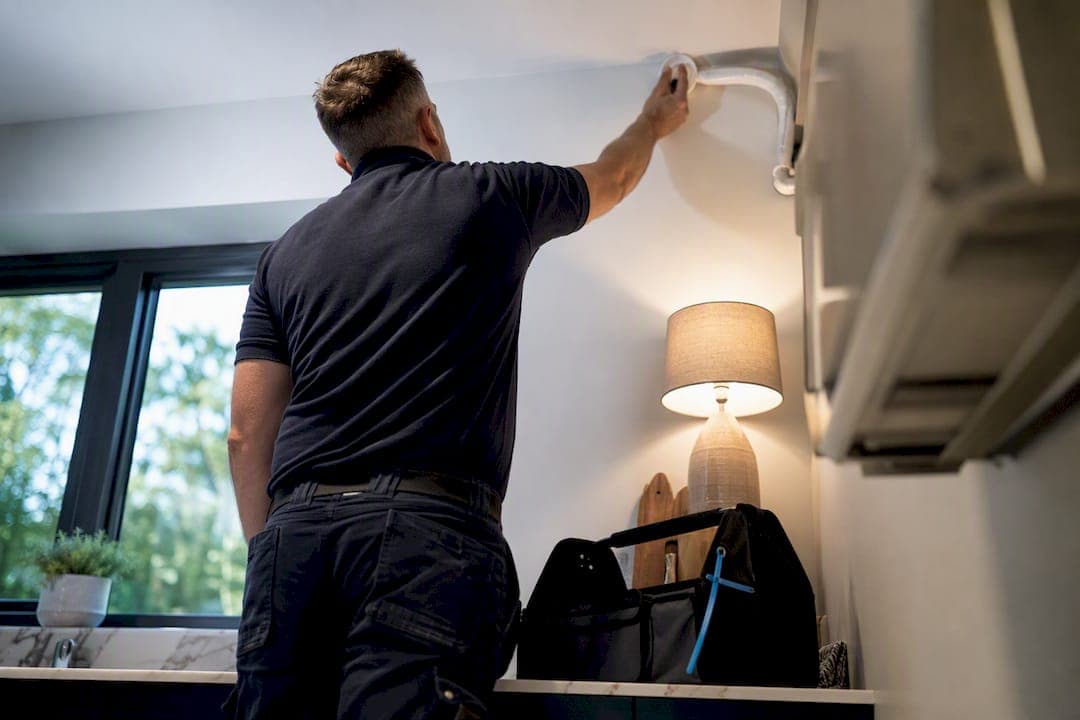
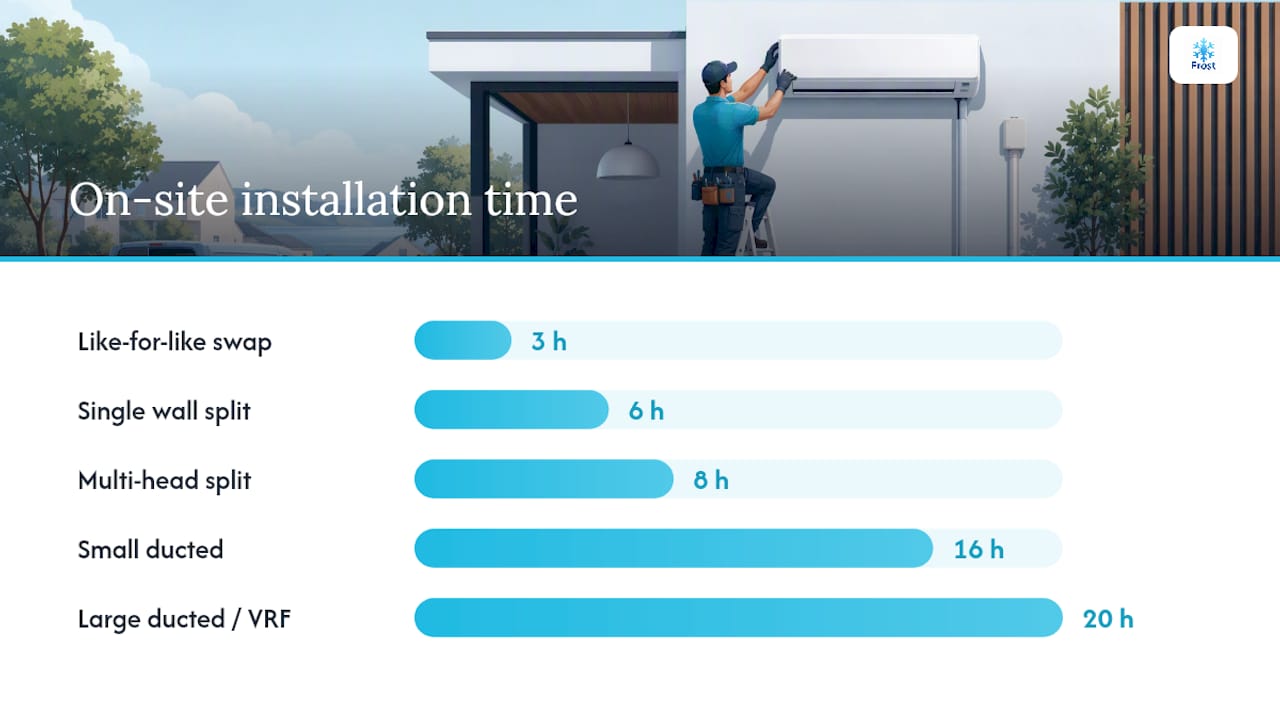
Most single wall-mounted split installs are done in a single day, on site for four to eight hours. Multi-head splits usually need about a full working day per crew, and ducted systems typically take several days depending on size and access. The bigger number readers actually need is the end-to-end wait: most UK domestic installs complete inside a few weeks from quote to commissioning, with equipment stock and permissions the two things that stretch that window.
TL;DR:
- Equipment availability and season significantly impact installation lead times, with popular models fitting within days and peak summer potentially adding weeks.
- Proper scheduling of electrical work and permissions can extend the timeline, especially in leasehold or conservation area scenarios.
- A full installation, from survey to paperwork, typically completes within a couple of weeks if no delays occur, but rushing may lead to future system failures.
- Homeowner preparation, such as clear access and early electrical checks, can reduce delays and secure preferred installation dates.
- Frost Air Conditioning offers same-day domestic installation in the South West by keeping stock, but proper system commissioning remains essential to long-term performance.
Table of Contents
- How long does aircon installation actually take on site?
- What extends or shortens your lead time?
- What's the full timeline from enquiry to commissioning?
- How can you shorten the wait and secure your preferred date?
- What UK rules and permissions should you factor into the timeline?
- How does Frost Air Conditioning manage lead times in the South West?
- Why realistic scheduling beats a rushed install
- Ready to book your installation?
- Sources
- FAQ
How long does aircon installation actually take on site?
The figure everyone asks for first is how many hours a crew will spend in the house, and it varies a lot by system type.
- Single wall-mounted split: 4 to 8 hours for one indoor unit and its matching outdoor condenser.
- Multi-head split: generally requires about a full working day for two indoor heads, with extra time for additional heads.
- Small ducted system: typically takes one to a few days, since ductwork and diffusers require more time to route through a ceiling void.
- Large ducted or commercial VRF/VRV system: 2 to 3 days or more, particularly across multiple rooms or floors.
On the day itself, engineers work through the same core sequence regardless of system size: mounting the indoor unit bracket, positioning the outdoor condenser, running copper pipework and drainage, pulling a vacuum to remove moisture and air from the lines, charging the system with refrigerant to the manufacturer's specified weight, then commissioning and testing before handover. That vacuum test and refrigerant charge is the step most likely to get rushed on a badly-run job, and it's the one that determines whether the unit still works properly in three years.
Replacing an existing system is usually faster than a new install because the pipework, electrical supply and condenser pad are already in place. A like-for-like swap can sometimes be finished in a few hours, where a first-time install into a room with no existing infrastructure takes the full day quoted above.
What extends or shortens your lead time?
Two installs of the same system can have wildly different lead times, and the gap almost always comes down to five things.
- Equipment availability. Popular models held in stock can be fitted within days; special-order sizes or less common heat pump combinations can add weeks to the wait.
- Season. Summer is the bottleneck. National installers commonly advertise 7 to 14 day booking windows in quieter months, but during peak demand installers may be scheduling 3 to 6 weeks ahead, according to British Gas.
- Site access. Scaffolding, awkward condenser positions, or a loft with poor headroom all add hours the quote may not have anticipated.
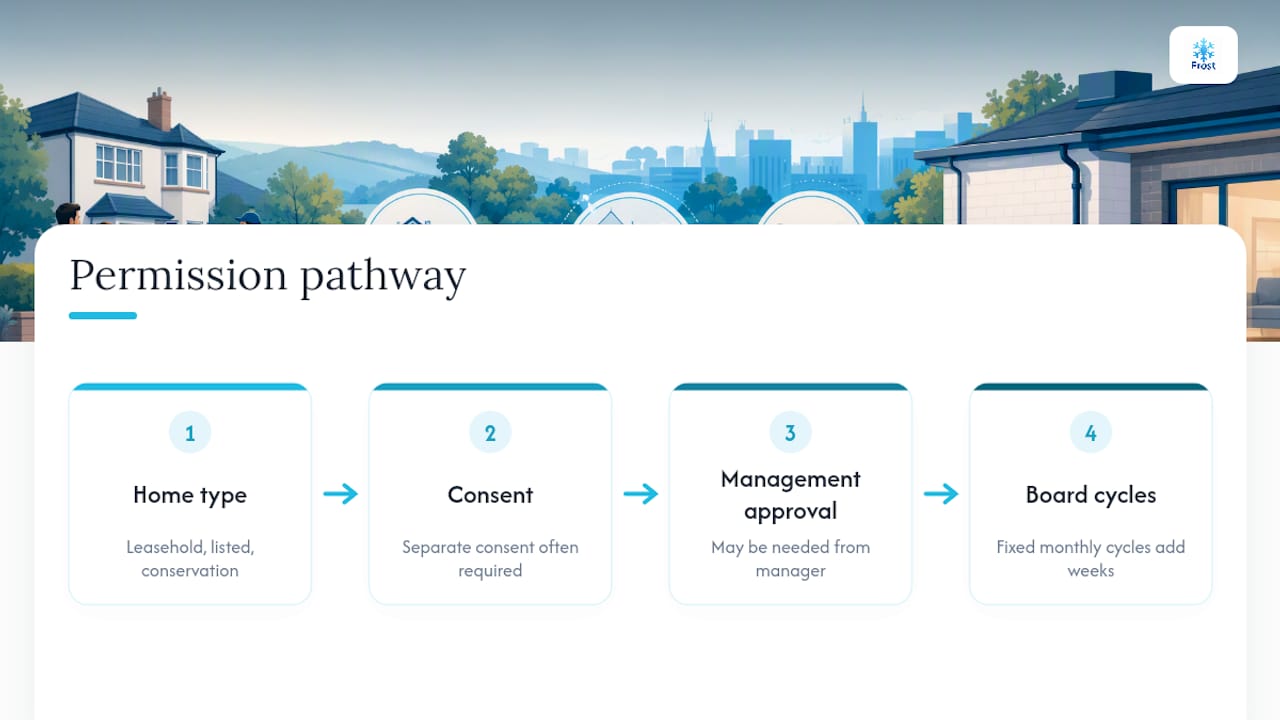
- Permissions. Leaseholders, flat owners and anyone in a conservation area or listed building may need freeholder or planning consent before an outdoor unit goes up, and those approvals run on their own timetable, not the installer's.
Pro Tip: Ask your installer to quote "on-site time" and "end-to-end lead time" as two separate figures in writing. A firm that only quotes one is usually hiding the part they can't control, which is almost always availability or permissions.
What's the full timeline from enquiry to commissioning?
A realistic installation runs through five distinct phases, and understanding each one is what stops a homeowner being caught out by a delay they didn't see coming.
- Enquiry and survey. Most installers can book a site survey within days; the visit itself covers wall or ceiling access, condenser placement, existing power supply and any obvious access problems.
- Quote acceptance and deposit. Homeowners typically take anywhere from a day to a couple of weeks to sign off and pay a deposit once the quote lands.
- Equipment ordering. Lead time here ranges from a few days for stock models to several weeks for larger or bespoke ducted systems.
- On-site installation and commissioning. This is the physical work covered above, from mounting to vacuum testing and final handover.
- Paperwork and F-Gas certification. The engineer issues compliance documentation confirming the refrigerant handling met F-Gas standards, which you'll want on file for any future sale or insurance claim.
Most UK domestic installs complete within a couple of weeks end-to-end when the equipment is in stock and no permissions are needed. Add planning consent or a leasehold approval to the mix, and that window can stretch considerably.
How can you shorten the wait and secure your preferred date?
Booking timing matters more than almost anything else in this process. If you want cooling installed before a summer heatwave, aim to book several months in advance rather than waiting until the first hot week of summer, when installers are typically fully booked.
- Ask for a provisional hold on a slot, or accept a nearby date, to lock in a crew and equipment before demand peaks.
- Choose an in-stock model rather than a special order if flexibility on brand or spec isn't a priority.
- Clear the installation area and confirm the outdoor condenser location before the survey, not on installation day.
- Check your electrical consumer unit has spare capacity, and flag it early if you suspect it doesn't.
Homeowner preparation genuinely moves the needle here. Clear access and an agreed condenser location can prevent an engineer having to return with scaffolding or extra electrical parts, which is one of the most common reasons a one-day job becomes a two-day job.
What UK rules and permissions should you factor into the timeline?
Two legal requirements sit behind almost every lead-time conversation, and both are worth understanding before you sign a quote. Refrigerant handling must be carried out by an engineer holding F-Gas certification; this isn't optional, and it's why the paperwork stage exists at the end of the process. Read our guide on F-Gas compliance checks if you want to verify a quote before booking.
Dedicated electrical circuits and external isolators count as notifiable electrical work, which means a qualified electrician needs to sign it off against UK building and electrical safety standards.
Leasehold flats, listed buildings and conservation areas can all require separate consent. Planning Portal guidance on conservation areas is worth reading early, because management company approvals often run on fixed monthly board cycles that can add some additional weeks on their own.
How does Frost Air Conditioning manage lead times in the South West?
Frost Air Conditioning's engineers are F-Gas certified, and the business offers 0% finance alongside same-day installation options for straightforward domestic jobs in Exeter and across the South West.
Scheduling follows the same structure covered above: survey, fixed quote, equipment order, install, then commissioning and paperwork. What changes is how tightly each stage is run, and same-day slots exist precisely because Frost keeps popular models in stock rather than relying on special orders for every job.
- Confirm any leasehold or planning permissions before your survey date.
- Keep the intended installation area and condenser location clear and accessible.
- Check your power supply and consumer unit capacity ahead of time.
Readers wanting the mechanics of a fast turnaround can see the full process in the guide on same-day aircon installation.
Why realistic scheduling beats a rushed install
A fast install that skips proper vacuum testing or refrigerant charging isn't actually faster. It just moves the delay to six months later, when the unit fails and you're booking an emergency callout instead of a routine one. Ask any installer for a written timeline and F-Gas paperwork before you sign, and treat a slightly longer wait for a properly commissioned system as the better trade. A written handover checklist costs nothing to request and tells you exactly what was tested.
— James
Ready to book your installation?
If you've read this far, you already know the two numbers that matter: on-site hours and end-to-end lead time. The company quotes both, upfront, rather than letting one hide behind the other, and offers same-day installation for straightforward domestic jobs across Exeter and the South West.

When you request a quote, ask specifically for the equipment lead time on your chosen model, the number of on-site hours expected, and confirmation that commissioning and F-Gas paperwork are included in the price, not billed separately. Frost's domestic installation page covers 0% finance options and lets you check current availability for your postcode. If your system needs ongoing servicing once it's in, the maintenance page covers annual contracts worth arranging at the same time. Get in touch to check current slots and ask about a provisional hold if you're planning around a specific date.
Sources
- How long does air conditioning installation take? — AC Store
- How is air conditioning installed? — Aircon Adviser
FAQ
How long does an aircon installation take?
A single wall-mounted split typically takes 4 to 8 hours on site; ducted systems can take 1 to 3 days depending on size and access.
What is the 3 minute rule for aircon?
The "3 minute rule" refers to waiting roughly three minutes after switching an air conditioning unit off before restarting it, to protect the compressor; it isn't related to installation timing or lead times.
Is it legal to install AC in the UK?
Yes, but refrigerant handling must be done by an engineer with valid F-Gas certification, and associated electrical work is notifiable under UK building and electrical safety standards.
How long does it take to get air conditioning installed end to end?
Most UK domestic installs complete inside one to two weeks when equipment is in stock and no permissions are needed, though peak summer demand or leasehold consent can extend this to several weeks. Frost Air Conditioning offers same-day options for straightforward domestic jobs where stock allows.