
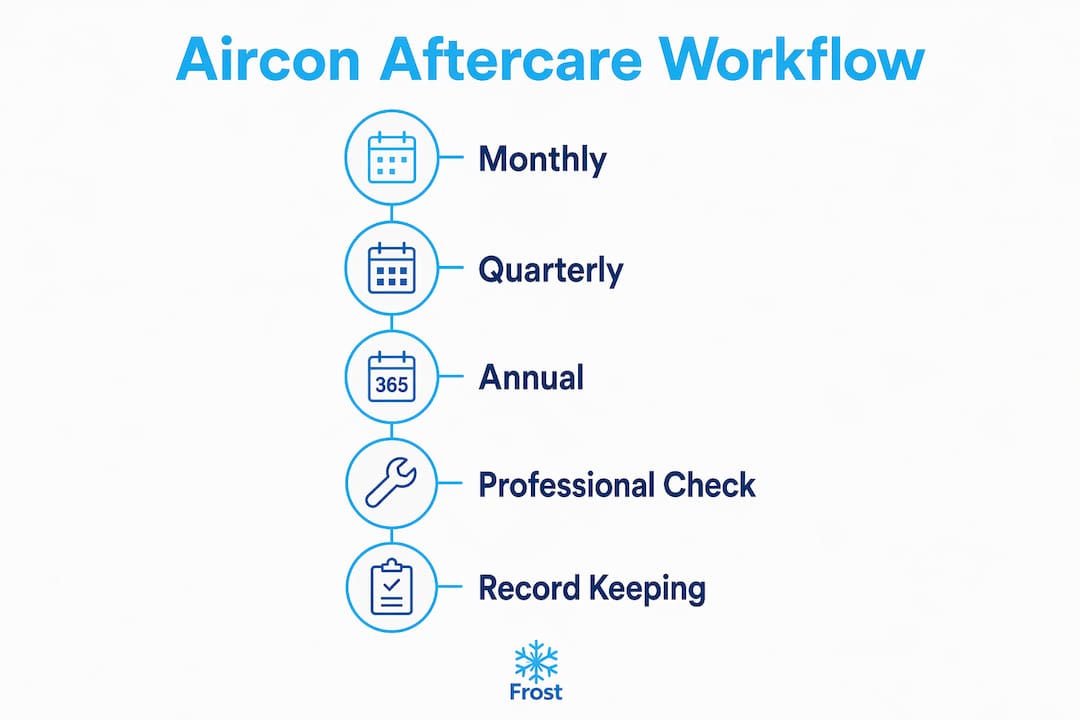
An aircon aftercare workflow is a scheduled programme of maintenance tasks designed to keep your air conditioning system running efficiently, safely, and for as long as possible. A well-structured HVAC aftercare process covers three tiers: monthly tasks you handle yourself, quarterly checks around the outdoor unit, and an annual professional service. Preventative maintenance can reduce energy consumption by up to 40% and extend system lifespan well beyond the average. Frostairconditioning recommends treating this not as a reaction to problems, but as a repeatable routine that protects your investment from day one.
What is the aircon aftercare workflow homeowners should follow?
A structured aftercare workflow splits into three clear tiers: monthly, quarterly, and annual. Each tier targets a different part of the system and a different level of risk. Getting the timing right is what separates a system that lasts 15 years from one that fails in five.
Monthly tasks: filters and indoor unit
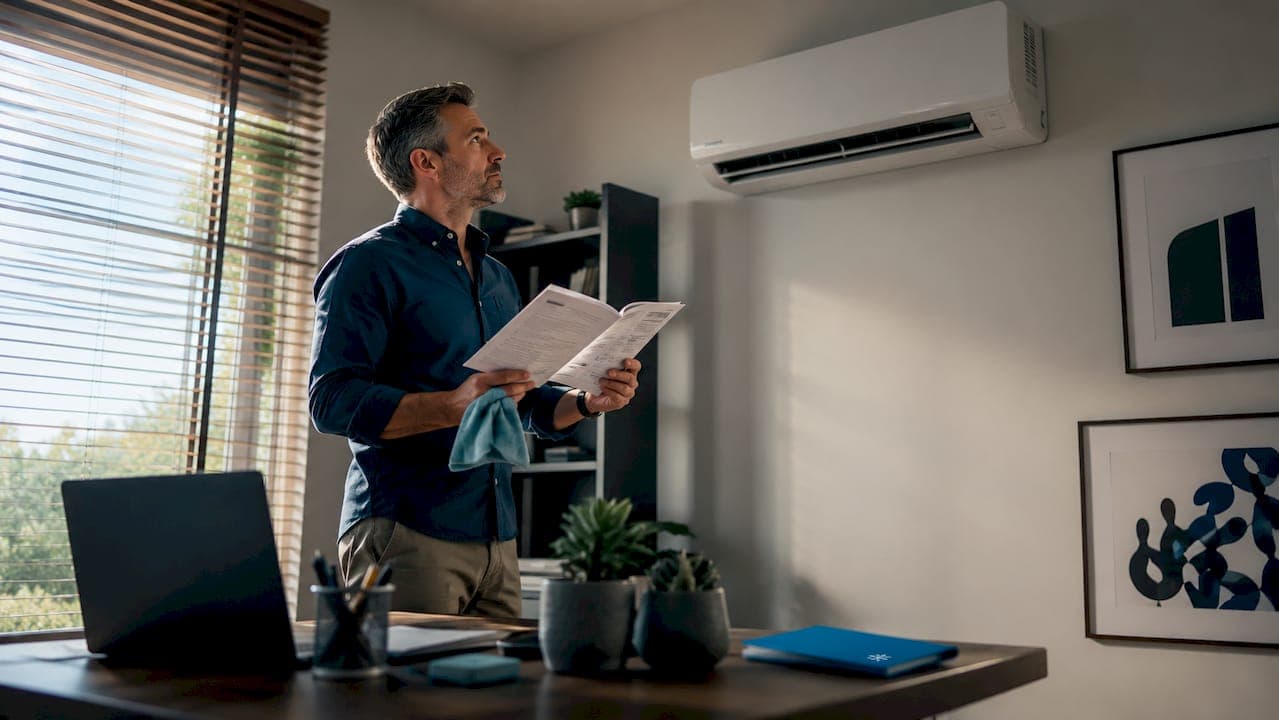
Cleaning your indoor air filters is the single most impactful task you can do yourself. Clogged filters increase energy usage by 10–15% and restrict airflow across the evaporator coil, forcing the compressor to work harder. Remove the filters, rinse them gently under a cool tap, and leave them to dry fully before refitting. Never refit a damp filter.
Wipe down the indoor unit casing with a dry or lightly damp cloth. Dust builds up around the louvres and vents, and over time it gets drawn back into the system. Check the condensate drain tray while you are there. A blocked drain causes water to back up and leak into your ceiling or wall, and it creates the damp conditions that mould needs to grow.
Quarterly tasks: outdoor unit clearance
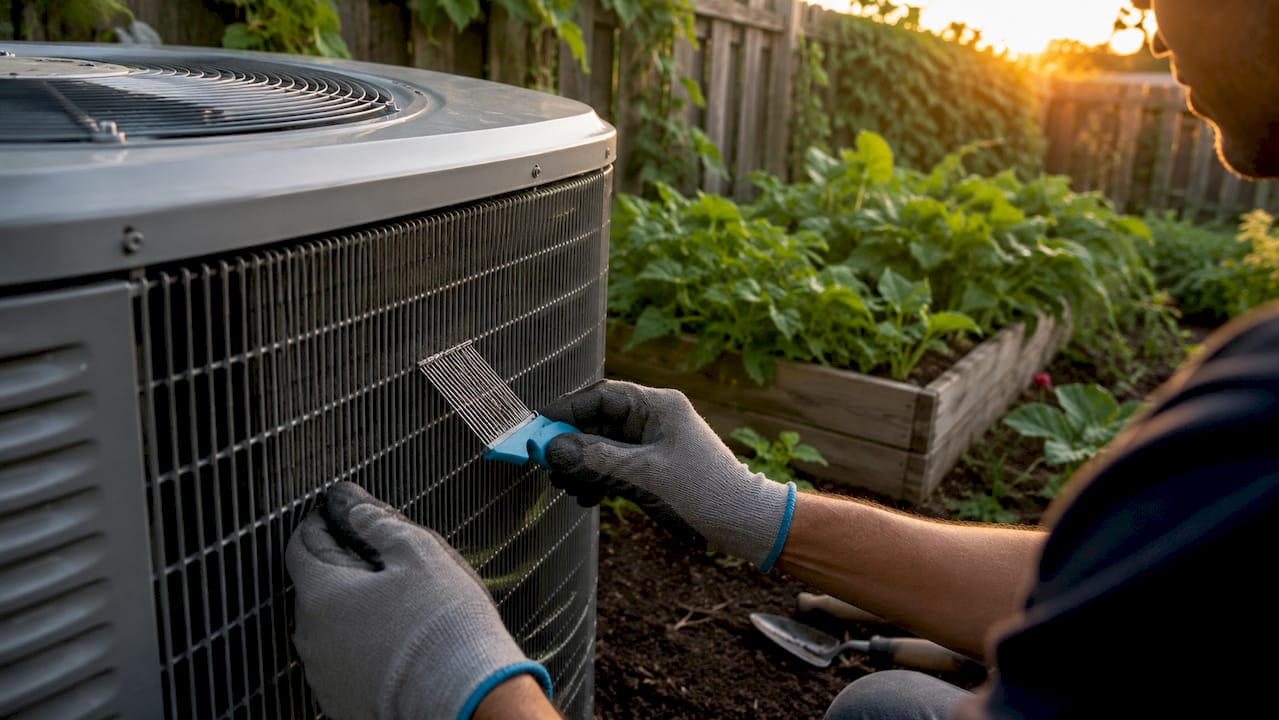
Maintaining at least 30 cm clearance around the outdoor unit prevents overheating and premature compressor failure. Vegetation, garden furniture, and windblown debris all restrict airflow through the condenser coil. Walk around the unit every three months and clear anything within that boundary.
Inspect the aluminium fins on the outdoor unit. They bend easily and when they do, airflow drops. You can gently straighten minor bends with a fin comb, which costs very little and is widely available online. If the fins are heavily damaged, flag it at your next professional service.
Rinse the outdoor condenser coils with a low-pressure hose to remove dust and debris. Always switch the unit off at the isolator before you do this. High-pressure washers bend fins and force water into electrical components, so avoid them entirely.
Pro Tip: Never spray water directly at the electrical connection box on the outdoor unit. Cover it loosely with a plastic bag before rinsing, then remove it once the unit has dried.
When should you schedule a professional aircon service?
Annual professional servicing is the non-negotiable part of any split system aftercare plan. DIY tasks keep the system ticking over, but they cannot replace the depth of a qualified engineer's inspection. Professional inspections detect hidden faults not covered by DIY tasks and should be carried out at least once a year.
A typical service visit covers the following:
- Deep cleaning of indoor filters and evaporator coil
- Blower fan inspection and cleaning
- Condensate drain flush and trap check
- Outdoor condenser coil cleaning
- Refrigerant pressure check and leak detection
- Electrical connection inspection and tightening
- Thermostat calibration and controls test
A professional service typically takes between 45 minutes and 1.5 hours depending on the system size and condition. That is a small time investment for the protection it provides.
Refrigerant handling is a legal matter, not just a technical one. Under UK F-Gas regulations, only engineers holding a valid F-Gas certificate can handle, recover, or recharge refrigerant. Frostairconditioning holds F-Gas certification, which means any refrigerant work is carried out legally and safely. Attempting to check or top up refrigerant yourself is both illegal and dangerous.
Book your annual service before the summer cooling season begins, ideally in april or may. Systems that have sat idle through winter are most likely to reveal faults when demand suddenly increases. Catching those faults before the heat arrives saves you from a breakdown on the hottest day of the year.
Watch for these warning signs between services. Any of them warrants a call to a qualified engineer rather than waiting for the next scheduled visit:
- Unusual noises such as grinding, rattling, or hissing
- Ice forming on the indoor unit or refrigerant pipework
- A sudden rise in energy bills without a change in usage
- Warm air blowing from a unit set to cool
- Water dripping from the indoor unit onto walls or flooring
How to organise your air conditioning maintenance records
Post-installation documentation is critical for homeowner aftercare and future warranty claims, yet it is often neglected. The moment your system is installed, start an aftercare folder. This does not need to be complicated. A cardboard folder or a dedicated folder on your phone works equally well.
Your aftercare folder should contain:
- The manufacturer's manual for both indoor and outdoor units
- Model numbers and serial numbers for each unit
- Your warranty documents and their expiry dates
- The installation certificate and any commissioning report
- A log of every service visit, including the date, engineer name, and work carried out
- Any fault codes that have appeared and how they were resolved
The Soft Landings commissioning framework establishes that commissioning documentation provides a baseline for ongoing performance monitoring. For homeowners, this means the paperwork from your installation is not just admin. It is the reference point that tells a future engineer exactly what your system was doing when it was brand new, making fault diagnosis faster and more accurate.
A simple maintenance calendar keeps the whole workflow on track. The table below shows a practical schedule for a typical split system in a UK home.
| Task | Frequency | Who carries it out |
|---|---|---|
| Clean indoor filters | Monthly (cooling season) | Homeowner |
| Wipe indoor unit casing | Monthly | Homeowner |
| Check condensate drain | Monthly | Homeowner |
| Clear outdoor unit clearance | Quarterly | Homeowner |
| Inspect and rinse condenser coils | Quarterly | Homeowner |
| Full professional service | Annually | F-Gas certified engineer |
A checklist-driven maintenance process minimises unexpected downtime and prolongs equipment life. Treating each task as a fixed calendar event, rather than something you get around to eventually, is the difference between a system that runs well for 20 years and one that needs replacing in ten.
For more detail on building your maintenance routine, the air conditioning maintenance tips guide from Frostairconditioning covers the practical side in depth.
What problems does a proper aftercare workflow prevent?
Neglected maintenance does not just reduce comfort. It creates a chain of faults that become progressively more expensive to fix. Understanding what goes wrong, and why, makes the case for keeping up with your aftercare schedule.
Blocked filters and reduced airflow. A dirty filter forces the system to draw harder to move the same volume of air. The evaporator coil runs colder than it should, ice forms, and airflow drops further. Left unchecked, this cycle strains the compressor, which is the most expensive component in the system to replace.
Outdoor unit overheating. Restricted clearance around the outdoor unit traps heat around the condenser. The refrigerant cannot release heat efficiently, system pressure rises, and the compressor overworks. Clearing that 30 cm boundary every quarter costs nothing and prevents a repair bill that can run into hundreds of pounds.
Drain blockages and mould. The condensate drain removes moisture extracted from your room air. When it blocks, water backs up into the unit and eventually onto your ceiling or wall. Damp building materials are a direct invitation for mould growth, which carries its own health and remediation costs.
Refrigerant leaks. A slow refrigerant leak reduces cooling capacity gradually. Most homeowners notice it as the system struggling to reach the set temperature. An annual pressure check catches leaks early, before the refrigerant level drops far enough to damage the compressor.
Pro Tip: If your system takes noticeably longer to cool a room than it did last summer, book a refrigerant pressure check before the next full service. Early detection costs far less than a compressor replacement.
For a broader look at how aftercare protects your system from the ground up, the homeowner's aftercare guide from Frostairconditioning is worth reading alongside this article.
Key takeaways
A structured aircon aftercare workflow combining monthly filter cleaning, quarterly outdoor checks, and annual F-Gas certified servicing is the most reliable way to protect system efficiency and extend lifespan.
| Point | Details |
|---|---|
| Monthly filter cleaning | Rinse and dry filters every month during the cooling season to prevent energy waste. |
| 30 cm outdoor clearance | Keep the area around the outdoor unit clear every quarter to prevent overheating. |
| Annual professional service | Book an F-Gas certified engineer annually to check refrigerant, electrics, and coils. |
| Keep an aftercare folder | Store manuals, serial numbers, and service records from day one to support warranties. |
| Act on warning signs early | Unusual noises, ice, or rising bills mean call an engineer, not wait for the next service. |
What I have learnt from years of aircon aftercare in the south west
The most common mistake I see from homeowners is treating aftercare as something that only matters when something goes wrong. By that point, the damage is already done. A compressor that has been running hot for two summers because the outdoor unit was buried in overgrown shrubs does not announce itself until it fails completely.
The second mistake is losing the paperwork. I cannot count the number of service visits where the homeowner has no idea what refrigerant type the system uses, when it was last serviced, or whether the warranty is still valid. That missing information slows down every diagnosis and sometimes voids a claim entirely. A post-installation check-in that hands over full documentation is not a nice extra. It is the foundation of every aftercare decision that follows.
What actually works is treating the whole process like a car service schedule. You do not wait for the engine warning light before changing the oil. You book it in, you keep the receipts, and you know exactly what was done and when. Air conditioning is no different. The homeowners I see getting 18 to 20 years from their systems are the ones who cleaned their filters every month and had an engineer in every spring without fail.
The DIY tasks are genuinely simple. They take less than 20 minutes a month. The professional service takes under 90 minutes once a year. That is the full commitment required to keep a well-installed system running at its best. The cost of skipping it is always higher than the cost of doing it.
— James
Frostairconditioning's service and maintenance support
Frostairconditioning provides professional service and maintenance for homeowners across Exeter and the south west, carried out by F-Gas certified engineers who know exactly what a well-maintained system should look like.
Whether your system is due its annual service or you have noticed a warning sign that needs attention, the team at Frostairconditioning can help. All work is carried out to F-Gas standards, and 0% finance options are available for larger repair or replacement work. Request a quote online and get a clear, no-obligation price before any work begins. Keeping your system in good shape has never been more straightforward.
FAQ
How often should I clean my aircon filters?
Clean indoor air filters monthly during the cooling season. Clogged filters increase energy usage by 10–15% and restrict airflow across the evaporator coil.
Can I service my air conditioning unit myself?
Homeowners can safely clean filters, wipe down the indoor unit, clear outdoor clearance, and rinse condenser coils. Refrigerant handling, electrical inspection, and pressure checks must be carried out by an F-Gas certified engineer.
How long does a professional aircon service take?
A professional service typically takes between 45 minutes and 1.5 hours, covering filter and coil cleaning, refrigerant pressure checks, and electrical inspection.
What documents should I keep after aircon installation?
Keep the manufacturer's manual, model and serial numbers, warranty documents, installation certificate, and a log of all service visits. This documentation supports warranty claims and speeds up future fault diagnosis.
What are the signs my aircon needs a professional check?
Book an engineer if you notice unusual noises, ice on the indoor unit, warm air from a cooling unit, water dripping indoors, or a sudden unexplained rise in energy bills.