
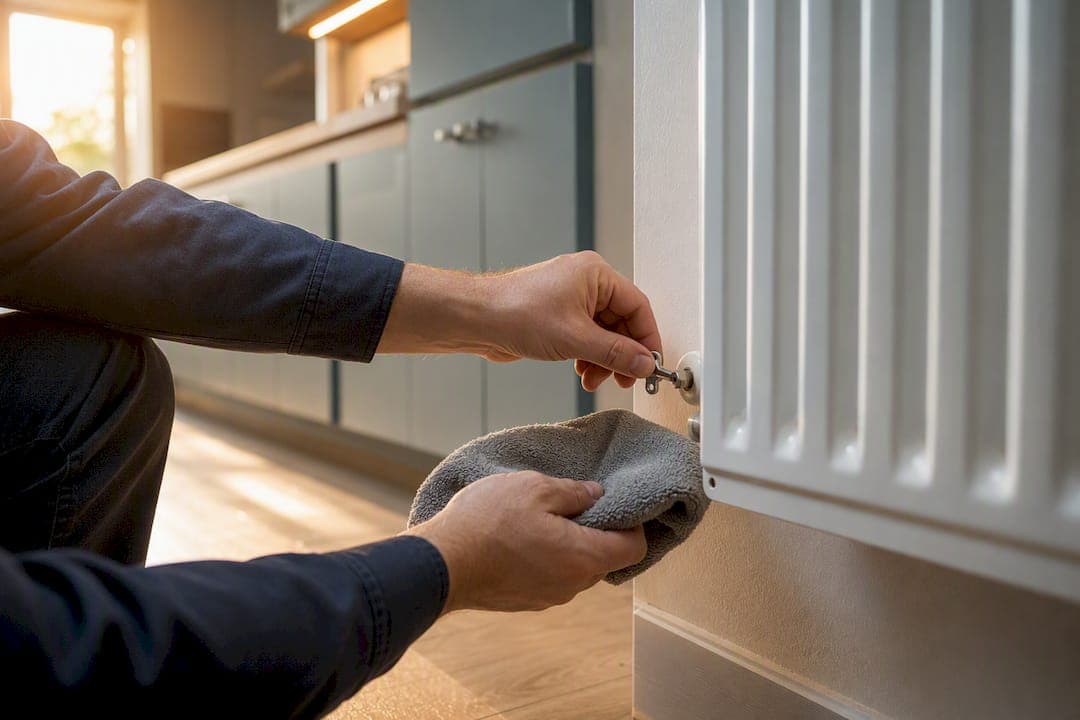
Air in a boiler system, in an air‑conditioning context, means air or another non‑condensable gas has entered the refrigerant circuit, and it needs a professional vacuum and nitrogen purge, not a refrigerant top‑up. This isn't a wait‑and‑see fault. Left alone, it raises pressure inside the system, drags in moisture that eats away at the compressor, and quietly inflates your energy bills.
If your system feels sluggish, noisy, or is running longer than it used to, stop any refrigerant top‑ups and get an F‑Gas and REFCOM certified engineer out to check it properly.
- Don't let anyone "just add gas" without checking for air first
- Ask directly whether they'll pull a vacuum and record the reading
- Request the 500 micron benchmark as proof, not just a verbal assurance
Pro Tip: If an engineer can't tell you what a micron gauge reading is, that's your answer. Ask before you book, not after they've left.
Key Takeaways
Air in an air conditioning refrigerant circuit demands professional recovery, a nitrogen purge, and a deep vacuum verified by a decay test, never a simple refrigerant top‑up.
| Point | Details |
|---|---|
| Never top up refrigerant blind | High pressure often signals air contamination, not undercharge, so diagnosis must come before adding gas. |
| Demand the 500 micron benchmark | A proper evacuation reaches 500 microns or below, confirmed with a 10 to 15 minute decay test. |
| Moisture is the hidden danger | Air usually brings moisture, which forms acids that corrode compressor internals over time. |
| Insist on written proof | Ask for a documented micron reading, decay test log, and service report before paying. |
| Choose Frost Air Conditioning for verified work | F‑Gas certified, REFCOM listed engineers who supply micron readings, decay logs, and workmanship warranties on every job. |
Table of Contents
- How does air get into an air conditioning system?
- What are the signs of air in your air conditioning system?
- Why is air in the refrigerant circuit actually harmful?
- How do engineers diagnose air in the system?
- What does a professional air removal fix involve?
- How do you choose a qualified engineer for the job?
- How can you stop air getting back into your system?
- What I'd tell a homeowner before they book a repair
- Get an F‑Gas certified engineer to sort it properly
- Sources
How does air get into an air conditioning system?
Air doesn't sneak into a sealed refrigerant circuit on its own. It gets let in, usually during installation or a repair, when the circuit is opened to the atmosphere and not properly evacuated afterwards.
The most common culprit is poor charging practice: a technician opens the line set, does the job, and skips the deep vacuum step before recharging. A proper evacuation to 500 microns or below removes both air and moisture, but it takes time, and cutting corners here is cheap in the short term and expensive later.
Other entry points include:
- Low‑side leaks that draw ambient air into the circuit whenever the system cycles
- Forgotten hose purges, where air trapped in the service hoses gets pushed straight into the system
- Non‑vacuum‑rated hoses that let moisture and air seep through the hose wall itself
- Skipping the nitrogen purge after a brazing job or pressure test, leaving residual gas behind
Pro Tip: Ask any technician quoting for repair work whether they'll purge with nitrogen and what vacuum target they're aiming for. A confident, specific answer tells you a lot about who you're hiring.
What are the signs of air in your air conditioning system?
You'll usually notice a drop in cooling performance before anything else. The unit runs longer to hit the same temperature, and you might hear unusual gurgling or hissing near the outdoor unit as trapped gas moves through the circuit. Energy bills creep up too, since the compressor is working harder for less output.
A technician confirms it with harder numbers. According to Purdue's residential heat pump study, non‑condensable gas typically shows up as high head pressure, elevated discharge temperature, and high condenser subcooling, while suction pressure stays normal or only slightly high. Compressor amp draw tends to climb too.
Before calling for a service visit, check for:
- Cooling that's noticeably weaker than it used to be
- Longer run times for the same temperature drop
- Unusual noise from the outdoor condenser
- A steady rise in energy bills with no other explanation
- Bubbling or foaming visible in the sight glass, which points to low charge or air rather than a simple flow issue
Why is air in the refrigerant circuit actually harmful?
Air and other non‑condensable gases don't just sit there doing nothing. They raise condensing pressure because the compressor has to squeeze the refrigerant harder to reach the same output, which pushes discharge temperatures up and drags cooling capacity down. Experimental research on air‑source heat pumps confirms that non‑condensable faults measurably reduce both COP and capacity, and that simple field checks can actually overestimate how much gas is present without proper testing.
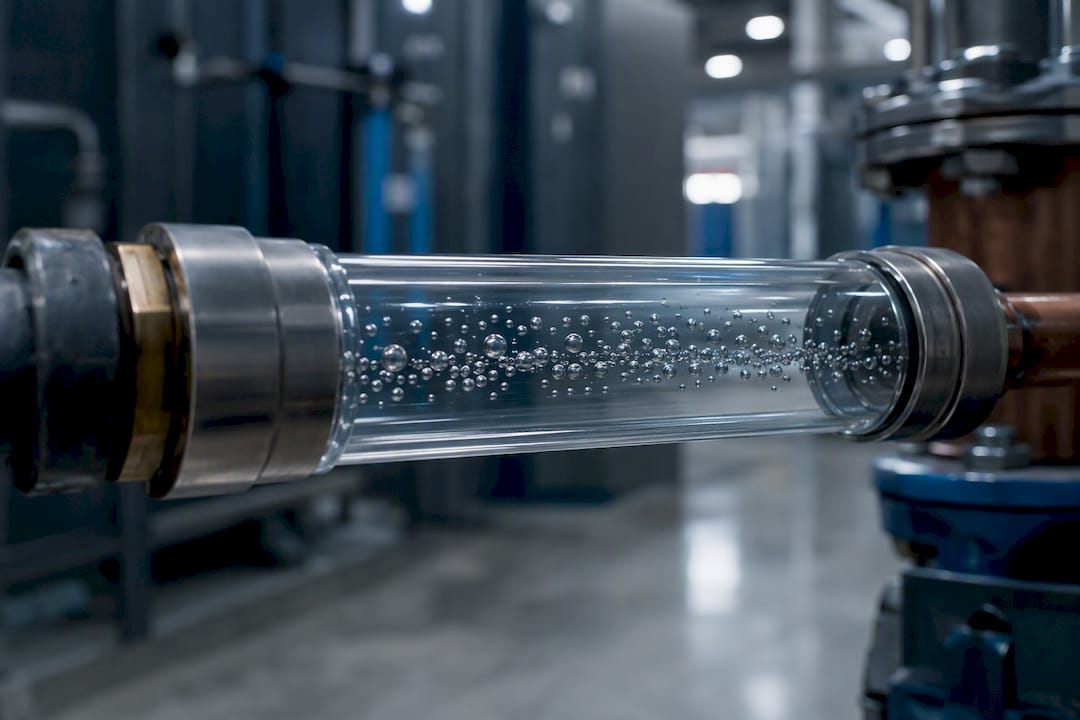
The bigger risk usually isn't the air itself, it's what comes with it. Moisture almost always accompanies air contamination, and moisture reacts with refrigerant and oil to form acids. Those acids corrode copper windings, degrade motor insulation, and can plate metal onto internal compressor parts. Left unchecked, ice can form at the expansion device and block refrigerant flow altogether.
The practical fallout looks like this:
- Reduced cooling capacity for the same power draw
- Higher running costs month after month
- Accelerated wear on the compressor, often the most expensive single part to replace
- Oil breakdown that shortens the lifespan of the whole system
How do engineers diagnose air in the system?
A competent technician doesn't guess. They confirm non‑condensable gas with measurable evidence, not a hunch based on how the unit sounds.
- Deep vacuum check. The circuit is pulled down to 500 microns or below, the accepted benchmark for a standard residential or light commercial system.
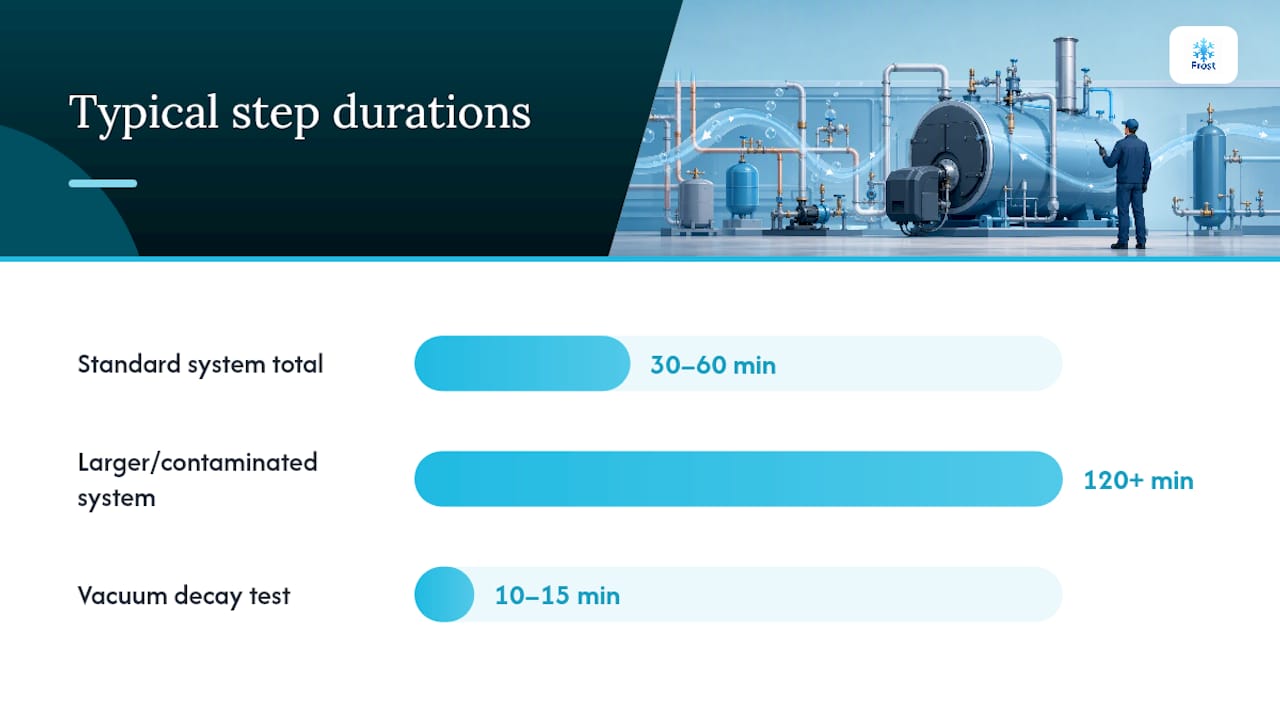
- Isolation decay test. The vacuum pump is shut off and the micron gauge is watched for 10 to 15 minutes. If the reading climbs back up past roughly 1,000 to 1,500 microns, that points to a leak, residual moisture, or trapped non‑condensable gas still in the circuit.
- Pressure and temperature cross‑check. High head pressure paired with normal suction readings is a classic non‑condensable signature, distinct from a simple overcharge.
- Sight glass and amp draw review. Bubbling, inconsistent superheat and subcooling figures, and elevated amp draw all add weight to the diagnosis.
A study on detection features and charge interactions found that non‑condensable gas complicates charging decisions based on superheat and subcooling alone, which is exactly why careful measurement matters more than a quick pressure gauge glance. Every reading, especially the decay test result, belongs in a written service report you can keep on file.
What does a professional air removal fix involve?
Removing air properly is a sequence, not a single action, and skipping steps is how the problem comes straight back.
- Recovery. Existing refrigerant is legally recovered into a cylinder rather than vented.
- Nitrogen purge. Dry nitrogen flushes the circuit before evacuation begins, clearing out residual air and moisture ahead of time.
- Deep evacuation. A vacuum pump pulls the system down to the target of 500 microns or below, using vacuum‑rated hoses and Schrader core removal tools to speed the process and avoid restrictions.
- Decay test. The system is isolated and monitored for 10 to 15 minutes to confirm the vacuum holds.
- Filter drier replacement. A fresh drier is fitted to catch any remaining moisture and contaminants.
- Recharge and verification. Refrigerant is added to the manufacturer's specified charge, then superheat and subcooling are checked to confirm normal operation.
For a standard system under 50 feet of line set, this whole process typically takes 30 to 60 minutes. Larger, older, or moisture‑contaminated systems can take two hours or more, sometimes needing a second evacuation cycle if the first decay test shows a slow rise.
Pro Tip: If a technician's evacuation is done in ten minutes flat, ask how. A genuine deep vacuum on most residential systems simply cannot happen that fast.
How do you choose a qualified engineer for the job?
The certifications matter more than the sales pitch. Look for F‑Gas certification and REFCOM membership as a baseline, since both confirm the engineer is legally qualified to handle refrigerant. Manufacturer training from brands like Daikin, Mitsubishi, or Samsung is a further signal they know your specific equipment, and public liability insurance protects you if something goes wrong on site.
Ask to see proof, not just a certificate on a van door:
- A documented micron reading and decay test result
- A written service report noting what was replaced, including the filter drier
- Photographs of the gauges and hose setup during the job
- A warranty or maintenance contract covering the work
Skipping the nitrogen purge or using hoses that aren't vacuum‑rated is one of the most frequent causes of long evacuation times and incomplete moisture removal that technicians see in the field.
Red flags are easy to spot once you know what to look for: an offer to simply "top up" the gas, reluctance to show you a micron gauge reading, or no written report at all. Compare quotes on certification, equipment and procedure, proof of testing, warranty and aftercare, and how quickly they can actually turn up.
How can you stop air getting back into your system?
Prevention is mostly about insisting on the right process every time the circuit gets opened, not a one‑off fix.
- Book regular maintenance with F‑Gas and REFCOM certified technicians who check pressures and look for slow leaks
- Insist on a nitrogen purge and a documented decay test after any repair, not just a verbal "it's fine"
- Ask that vacuum pump oil is fresh and hoses are vacuum‑rated, since old oil and worn hoses are a common source of trapped moisture
- Never let anyone top up refrigerant without evacuating first, and keep every service report on file as your evidence trail
What I'd tell a homeowner before they book a repair
Vacuum and decay test proof isn't paperwork for the sake of it. It's the only reliable way to know an engineer actually removed the air rather than papering over the symptoms with more refrigerant. I'd never sign off a job without seeing that number.
Ask for it in writing, along with a warranty or maintenance contract, before you agree to anything. Frost Air Conditioning is one example of a local outfit set up to hand over exactly that kind of documented proof as standard.
Get an F‑Gas certified engineer to sort it properly
Frost Air Conditioning fixes air and non‑condensable gas problems the way the diagnosis above describes, with a full recovery, nitrogen purge, and deep evacuation, rather than a quick refrigerant top‑up that masks the fault for a few weeks.

Every engineer is F‑Gas certified and REFCOM listed, with manufacturer training on Samsung, Mitsubishi, Toshiba and Daikin systems, and every job leaves you with a documented micron reading, a decay test log, a note on the replaced filter drier, and a written service report. If you're a business owner dealing with a shop unit that's underperforming, the same evacuation standards apply to commercial installs too.
If your system is showing any of the symptoms covered above, don't let it run on guesswork. Request a quote and get a proper diagnostic booked in, or explore maintenance contracts to catch air contamination before it damages the compressor.
Sources
- Impacts and Detection of Non‑Condensable Gas in a Residential Air Source Heat Pump
- How to Vacuum an AC System: Complete Step‑by‑Step Guide
- How to evacuate and recover refrigerant safely
- Non‑condensable gas in the refrigerant of air‑source heat pumps: Interactions between detection features, charge level, and temperature
- Non‑condensable gas in the refrigerant of air‑source heat pumps: Interactions between detection features, charge level, and temperature