
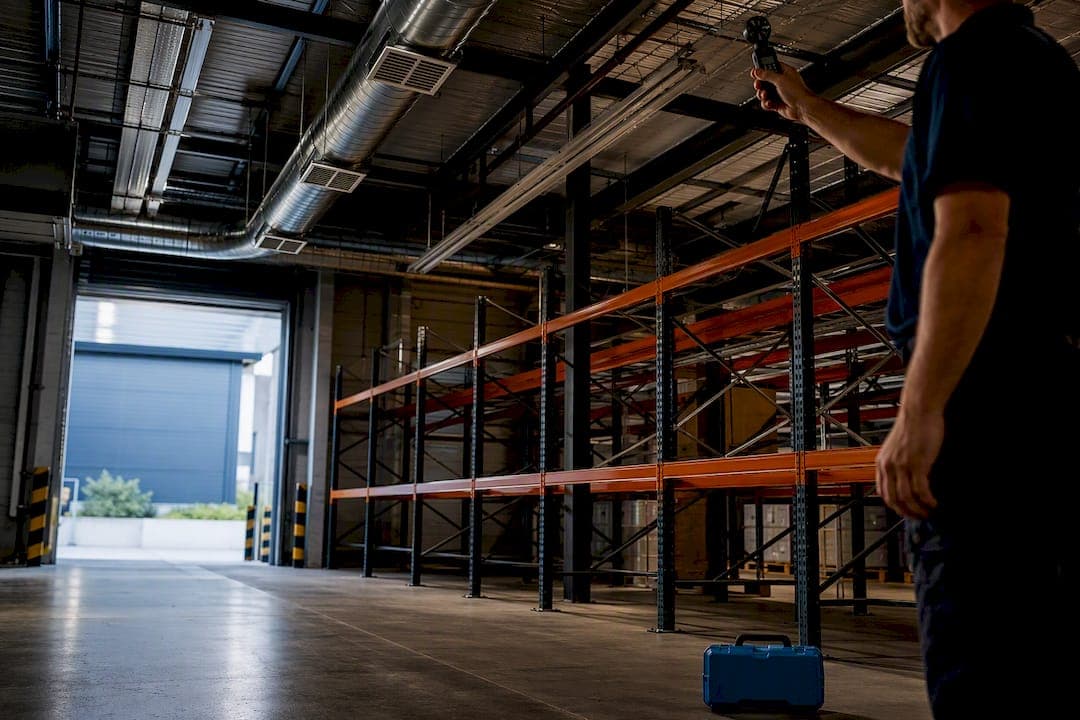
Frostairconditioning designs, installs and maintains commercial air conditioning for small and medium warehouses across Exeter and the South West, with F‑Gas certified engineers and same day emergency cover. The right next step is a site survey to confirm whether your setup sits near the 12 kW inspection threshold and what compliance work follows. Book that survey before you commit to any system, and expect a phased installation plan that keeps loading bays and picking routes open throughout.
TL;DR:
- Systems exceeding 12 kW combined output require inspections every five years and must be registered on the national energy register.
- Modern VRF and multi-split systems typically offer better efficiency and zoning control but may involve more complex installation and maintenance needs.
- Proper site surveys should assess specific load calculations, zoning, access constraints, and phased installation plans to avoid costly mistakes.
- Installation costs vary based on system type, zones, roof or ductwork requirements, with timelines extending if access is limited or operating during works.
- All projects must comply with regulations, requiring qualified installers with F-Gas and stationary equipment certificates, plus detailed commissioning documentation.
Table of Contents
- Do you need a dedicated warehouse cooling system?
- Common system types for small-to-medium warehouses
- Regulations, inspections and certifications to check
- How to choose a local installer: the checklist
- Typical costs and timelines for South West warehouse installs
- Maintenance, service contracts and emergency repairs
- Notes from the field: what actually slows warehouse installs down
- Ready to book a site survey or emergency visit?
- Where these figures and rules come from
- Sources
Do you need a dedicated warehouse cooling system?
Start with the maths, not the guesswork. Add up the rated output of every unit that will run under one control system. Government guidance on air conditioning inspections suggests roughly 200 m² of general office space equates to around 12 kW, so a warehouse with an open-plan office, a server cupboard and a couple of split units in the goods-in area can cross that line faster than owners expect.
Beyond the regulatory trigger, a few operational signals point towards a proper installation rather than a stopgap:
- Temperature-sensitive stock (food, pharmaceuticals, electronics, certain packaging materials)
- Staff working extended shifts in areas prone to internal heat gain from machinery or lighting
- Complaints about specific zones rather than the whole building
- Existing units that can't keep pace during summer peaks
If you're only cooling a single office or a small server room, a wall-mounted split may do the job. Once you're conditioning multiple zones or racked storage areas, you're generally in ducted or packaged commercial territory.
Common system types for small-to-medium warehouses
Most warehouse quotes in the South West fall into three categories, and each suits a different layout.
Multi-split and VRF/VRV systems let you run several indoor units off one or two outdoor condensers, with independent zone control. This works well where racking creates distinct thermal zones, letting you cool the picking area without overcooking storage that doesn't need it.
Packaged rooftop units suit warehouses with suitable roof access and structural capacity. One unit handles a larger floor area with less internal ductwork disruption, though roof strengthening or crane access can add cost.
Wall or floor-mounted splits remain the practical choice for offices, meeting rooms or server cupboards tucked inside a larger warehouse shell, where a dedicated small system is cheaper than extending a central one.
The trade-offs come down to four things:
- Disruption during install — rooftop units often mean less internal scaffolding
- Zoning control — multi-split wins for varied thermal demands
- Running efficiency — modern VRF systems typically outperform multiple standalone splits
- Maintenance access — rooftop plant needs safe roof access built into the service plan
Pro Tip: Ask any installer to walk the site with you before quoting a system type. A five-minute look at your racking layout and roof access often changes the recommendation entirely.
Regulations, inspections and certifications to check
Compliance isn't optional, and it isn't as simple as "under 12 kW, don't worry about it." Here's what actually applies.
- The 12 kW threshold counts combined output. Under the Energy Performance of Buildings Regulations 2012, multiple units under one control system count as a single system for this threshold, even if no individual unit exceeds it alone. This catches out plenty of warehouse owners who assessed each unit separately.
- Systems over 12 kW need inspection every five years, carried out by an accredited energy assessor who lodges the report on the national register, Gov.
- Installers and service engineers need F‑Gas qualifications (Category I to IV, depending on scope), and the business itself must hold a stationary equipment company certificate to legally carry out refrigerant work.
- Ask for commissioning records upfront. Good documentation, including catalogues and maintenance history, shortens the assessor's visit and cuts inspection costs, according to the same GOV.UK guidance.
None of this is exotic paperwork. It's the baseline any competent installer should handle without prompting.
How to choose a local installer: the checklist
A proper site survey should include load calculations for your specific space, proposed zoning, access constraints, and a phasing plan that keeps you trading. If a quote arrives without any of that, treat it as a red flag rather than a bargain.
Before signing anything, request:
- F‑Gas personnel certificates for the engineers actually doing the work
- The company's stationary equipment qualification certificate, not just individual credentials, as REFCOM explains
- Proof of public liability insurance
- References from previous warehouse or commercial storage projects, not just domestic jobs
On commercial terms, pin down the written commissioning report, warranty length, whether a maintenance contract is included or optional, emergency response times, and whether 0% finance is available to spread the cost.
Pro Tip: If an installer can't produce a commissioning checklist or explain how they'll phase work around your busiest loading times, ask why. A rushed quote often means a rushed install.
Watch for vague phasing promises, no mention of refrigerant documentation, or an installer who can't point to a single warehouse-scale project they've completed.
Typical costs and timelines for South West warehouse installs
Costs depend on system type, number of zones, presence of ductwork or roof penetrations, and any needed upgrades to the electrical supply. Access constraints, such as a warehouse still operating during works, also push timelines out.
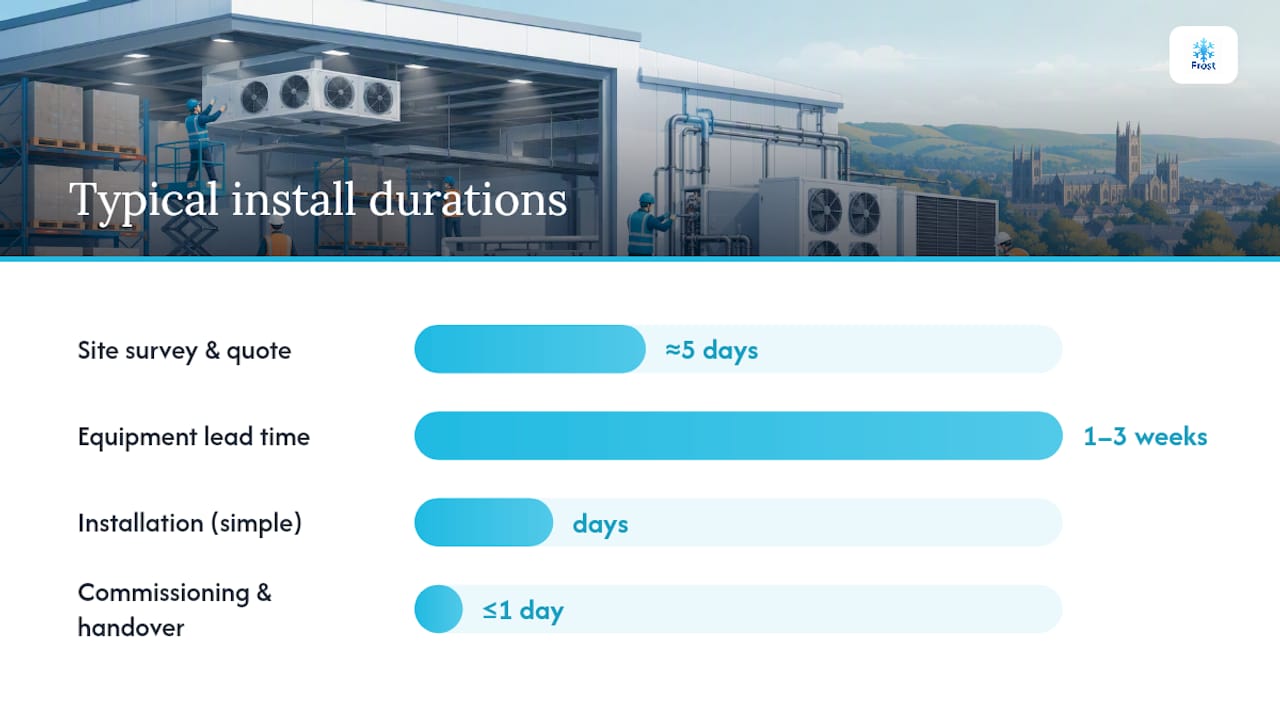
A realistic run for a straightforward small warehouse job looks like this:
- Site survey and quote: a few days to a week
- Equipment lead time: one to three weeks depending on system
- Installation: days for a simple split or multi-split job; longer where ducting or roof work is involved
- Commissioning and handover: typically completed within a day once equipment is fitted
Experienced contractors sequence work around shifts and loading schedules specifically to avoid halting order fulfilment.
Maintenance, service contracts and emergency repairs
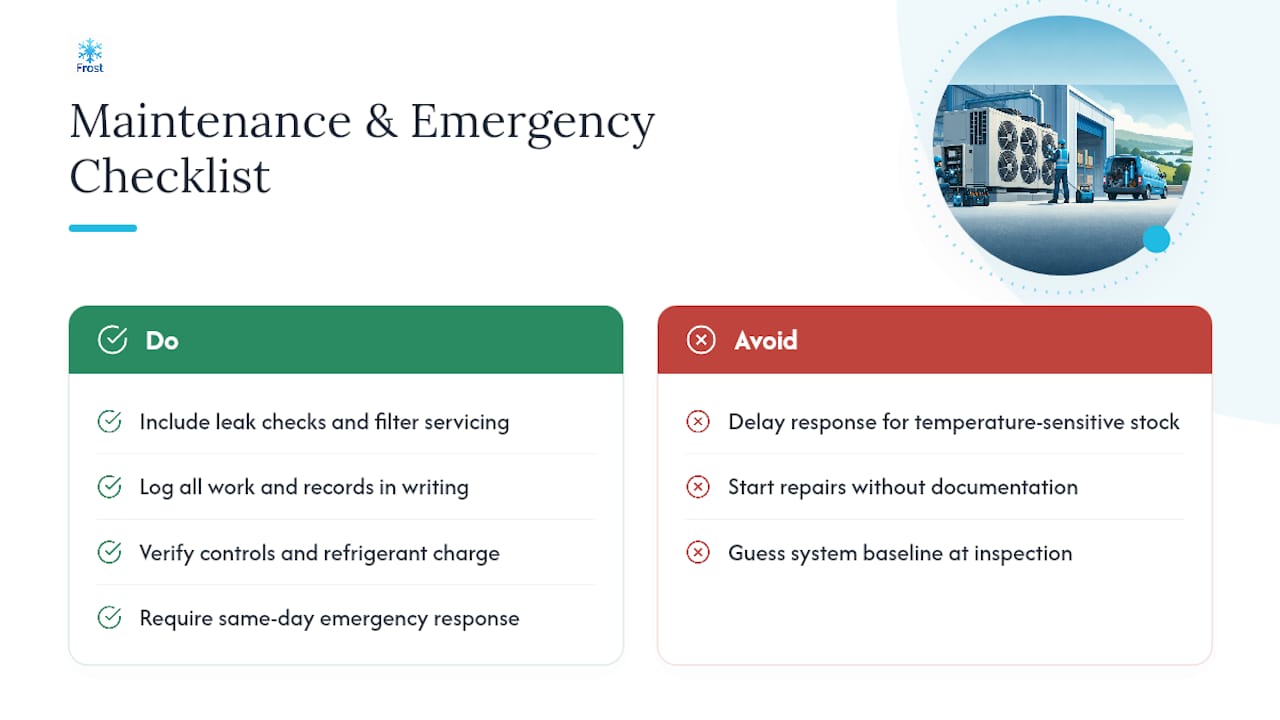
An annual maintenance contract should cover leak checks, filter cleaning or replacement, controls calibration, and refrigerant charge verification, with everything logged in writing. Those records matter twice over: they keep the system running efficiently and they speed up any future five-year inspection.
When something fails, a proper emergency response includes rapid diagnosis, temporary measures to protect stock or staff comfort, and clear communication on parts lead times if a component needs replacing. Same-day response matters most for warehouses running temperature-sensitive stock, where even a few hours of lost cooling has real cost.
A service maintenance contract with good documentation also means your next inspection or repair starts from a known baseline, not a guess. That saves time and money over the life of the system.
Notes from the field: what actually slows warehouse installs down
The single biggest constraint on most warehouse jobs isn't the equipment. It's keeping the site operational while the work happens. Phasing around loading bays and picking routes, working off-peak hours where possible, and staging deliveries so aisles stay clear are all standard practice for a contractor who's done this before.
Frost Air Conditioning brings F‑Gas certified engineers, same-day installs where the job allows it, and 0% finance to spread costs without disrupting cash flow. If you're unsure whether your setup already sits near the 12 kW mark, or you're dealing with a breakdown right now, get in touch for a site survey or emergency advice.
— James
Ready to book a site survey or emergency visit?
If you've been weighing multi-split against packaged rooftop, or wondering whether your existing units already trip the 12 kW threshold, the fastest way to get a straight answer is a site visit rather than another spreadsheet exercise. Frost Air Conditioning surveys warehouses and distribution units across Exeter and the South West, and quotes with a phased plan built around your loading schedule from day one, not bolted on afterwards.

Three practical next steps: request a site survey to get load calculations and a phasing plan specific to your building; ask directly about a maintenance contract so compliance documentation is handled from the outset; and raise 0% finance during the same conversation if spreading costs matters to your budgeting. For larger bespoke projects involving office fit-out alongside warehouse cooling, the shop fitting team can scope combined works in one visit. Get in touch to arrange a survey and find out where your building actually stands.
Where these figures and rules come from
Inspection thresholds, five-year cycles and qualification rules come from GOV.UK's air conditioning inspection guidance, the EPB Regulations 2012, GOV.UK F‑Gas qualification guidance, and REFCOM's certification FAQs. Facilities managers weighing site-survey scope may also find this consulting overview useful background reading.
Sources
- Gov
- The Energy Performance of Buildings (England and Wales) Regulations 2012
- Gov
- REFCOM | F‑Gas Certification Frequently Asked Questions
- Warehouse HVAC: industry guidance on installations