
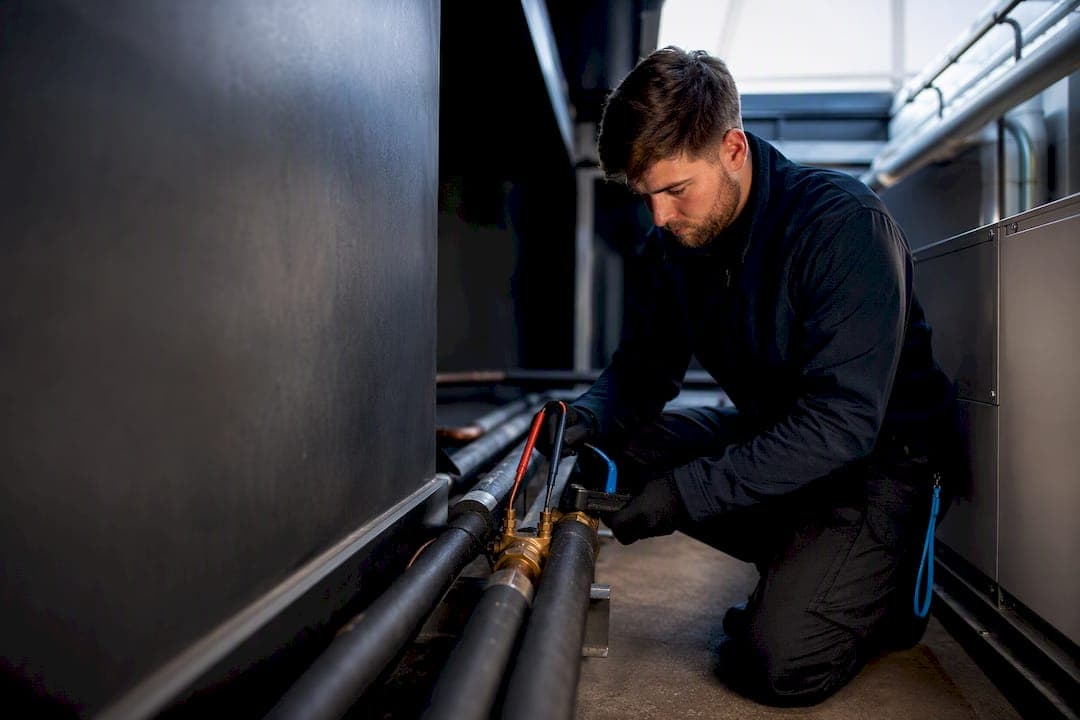
Daikin VRV systems give commercial buildings precise zonal control, lower running hours through inverter-driven compressors, and the ability to move heat between zones instead of wasting it, which is the single biggest efficiency lever in mixed-use and multi-tenant buildings. Installation flexibility and lower-GWP refrigerant options add further weight to the business case. The sections below unpack the mechanics, the installation realities, and the regulatory detail that determine whether those advantages actually show up on your energy bill.
TL;DR:
- VRV systems significantly reduce energy waste by modulating refrigerant flow and temperature, especially when precisely modeled for seasonal and part-load performance.
- Heat recovery capabilities allow simultaneous heating and cooling in different zones, maximizing efficiency in buildings with varying thermal demands.
- Proper installation, commissioning, and refrigerant management are crucial for VRV systems to meet their efficiency potential, particularly regarding pipe routing and control setup.
- Replacing R-410A with lower-GWP refrigerants like R-32 can lower environmental impact, but overall sustainability depends on seasonal efficiency and comprehensive lifecycle assessment.
- VRV systems are unsuitable for very large central plants or industries requiring continuous high-temperature heat, emphasizing the need for accurate modeling and quality maintenance.
Table of Contents
- What is VRV technology and what does it change for a building?
- How VRV saves energy in real projects
- Heat recovery: free heat from simultaneous heating and cooling
- Installation flexibility that matters on real sites
- Refrigerant choice and the sustainability trade-offs
- Controls and integration that protect real-world performance
- Where VRV is not the right answer
- Who stands behind this guidance
- Getting VRV right in a procurement brief
- Get a Daikin VRV system designed and installed properly
- Sources
- FAQ
What is VRV technology and what does it change for a building?
Variable refrigerant volume systems use inverter-driven compressors to vary refrigerant flow to each indoor unit, matching output to the actual load in that zone rather than cycling a fixed-capacity compressor on and off. One outdoor condensing unit can serve many indoor units of different types, cassettes, ducted units, wall-mounted heads, across a building, each controlled independently.
For an owner, the practical outcomes are:
- Independent zonal control so unoccupied or lightly used rooms are not overcooled or overheated.
- A smaller plant footprint than an equivalent chiller or boiler installation, useful where roof or plant room space is limited.
- A wider choice of indoor unit types to suit different room aesthetics and uses.
- Fewer full-load running hours, since compressors modulate rather than cycle at full output.
Offices, hotels, retail units and mixed-use refurbishments tend to benefit most, since these building types combine varied occupancy patterns with the zonal demands that VRV is built to handle.
How VRV saves energy in real projects
The efficiency case for VRV rests on three mechanisms working together. Inverter-driven compressors adjust speed continuously to match load, avoiding the losses associated with fixed-speed units cycling on and off. Variable refrigerant temperature control lets the system run at the minimum temperature difference needed for the current load rather than a fixed design condition. Together, these reduce cycling losses and let the system spend most of its operating hours at part load, where inverter systems are most efficient.
This is why part-load performance and seasonal efficiency matter more than a headline coefficient of performance figure measured at a single design condition. A unit with an impressive nominal COP can still perform poorly across a UK cooling or heating season if its part-load curve is weak.
Daikin's VRV heat pump data sheet lists seasonal efficiency figures and operating ranges that include temperatures down to minus 20°C, giving designers the part-load and low-temperature data needed to model real seasonal performance rather than relying on a single rated figure (Daikin VRV data sheet).
Pro Tip: Ask suppliers for seasonal efficiency figures and part-load performance curves, not just nominal COP, before comparing quotes.

Heat recovery: free heat from simultaneous heating and cooling
VRV heat recovery systems use a three-pipe arrangement that lets some indoor units cool while others heat at the same time, transferring the heat extracted from cooling zones to the zones that need it rather than rejecting it outdoors. Daikin's VRV 5 range supports this simultaneous heating and cooling and lists heating capacities up to 90 kW, with heat recovery aimed specifically at buildings where cooling and heating loads occur at the same time (VRV 5).
Buildings that suit this arrangement include:
- Perimeter offices with solar-gain zones needing cooling while north-facing or shaded zones need heating.
- Hotels, where guest rooms and communal areas rarely share the same load profile at the same time.
- Retail and mixed-use buildings combining plant rooms, sales floors and back-of-house spaces with different thermal demands.
For designers, the practical task is modelling coincident loads at building level, not just per-room peak loads, and routing the third refrigerant pipe so heat recovery branch boxes serve zones that genuinely run opposite duties at the same time.
Installation flexibility that matters on real sites
Long permissible pipe runs and comparatively small pipe diameters mean a single outdoor unit can serve indoor units spread across multiple floors, which is particularly useful in refurbishments where routing new pipework through occupied buildings is disruptive, as explained in detail by Caledonian Mechanical's HVAC resources. Daikin's Shîrudo technology, introduced with VRV 5, factory-integrates refrigerant safety measures, including leak detection and automated refrigerant recovery, which simplifies compliance with room-size safety standards and reduces the field-supplied equipment needed on site (Daikin press release).
Before specifying, installers should check:
- How much brazing and pipe jointing the layout requires, since each joint is a potential leak point.
- Whether service access to indoor units and branch boxes is maintained once ceilings and fit-out are complete.
- Which indoor unit types the room layout and occupancy actually suit, rather than defaulting to one type across the building.
Pro Tip: Confirm minimum room sizes against IEC60335-2-40 early. Shîrudo's factory safety measures can widen what is achievable without extra field ventilation.
For multi-zone comparisons against alternative system types, see this guidance on choosing VRF for multi-zone projects.
Refrigerant choice and the sustainability trade-offs
R-32 has a lower global warming potential than R-410A, which reduces the direct climate impact of any refrigerant leak over the equipment's life. Daikin's own data sheet quantifies this as a significant GWP reduction compared with R-410A for certain comparisons (Daikin VRV data sheet). That direct-impact reduction sits alongside the indirect impact of seasonal efficiency: a system that runs efficiently across the year cuts energy-related emissions regardless of which refrigerant it uses, so a genuine whole-life carbon assessment has to weigh both together rather than treating refrigerant GWP as the whole story.
Refrigerant regulation in Great Britain imposes containment, leak-check and phasedown obligations, and has driven large reductions in HFC emissions over recent years through these mechanisms (F-gas regulation analysis). In practice, this means owners need a refrigerant-management plan and a contractor qualified to carry out leak checks and recovery, not just a system that uses a lower-GWP gas.
Controls and integration that protect real-world performance
VRV's rated efficiency only shows up in practice if controls and integration are set up correctly. Cloud-based monitoring platforms let facilities teams track zone-by-zone performance and flag drifting compressors or refrigerant faults before they become breakdowns, supporting predictive maintenance rather than reactive callouts.

Where a building has mechanical ventilation, linking VRV to AHUs can extend heat recovery further, using rejected heat to pre-condition incoming fresh air rather than only moving it between indoor units.
At commissioning stage, checks should cover:
- Defrost strategy and how it affects heating output during cold spells.
- Electrical supply capacity, since simultaneous heat recovery operation can draw differently to simple cooling-only duty.
- Part-load validation against the design model, not just a full-load functional test.
CIBSE's guidance on large non-domestic heat pump projects sets out these same considerations, alongside part-load operation and electrical infrastructure, as material factors in delivered performance (CIBSE heat pump guidance).
Where VRV is not the right answer
VRV is not suited to every building. Very large central plant requirements, processes needing continuous high-temperature heat, or buildings where a single central chiller and boiler plant is genuinely simpler to maintain are cases where VRV's zonal strengths add cost without adding value. Poor design, inadequate commissioning and weak ongoing maintenance are the most common reasons a VRV installation underperforms its modelled efficiency, a point CIBSE's VRF guidance makes explicitly when it stresses that manufacturers' selection tools are aids, not a substitute for competent M&E design (CIBSE VRF guide).
Before signing a tender, ask suppliers for:
- Modelling evidence showing part-load and seasonal performance, not just headline COP.
- A written commissioning plan covering defrost strategy, electrical loading and heat-recovery validation.
- A maintenance and refrigerant-management strategy, including who carries out leak checks and recovery.
Who stands behind this guidance
This article is written by James for Frostairconditioning, an air conditioning installer covering Exeter and the South West. The business installs and maintains systems from Daikin alongside Samsung, Mitsubishi and Toshiba, with REFCOM and F-Gas certified engineers carrying out installation and refrigerant work directly rather than through subcontractors.
Getting VRV right in a procurement brief
If you take one thing from a VRV brief, make it this: prioritise whole-life carbon and heat-recovery integration over the lowest quoted price. Insist on modelling and commissioning evidence from your M&E designer before committing, since a well-specified VRV system and a poorly commissioned one can show very different running costs. We approach every VRV project the same way: design first, sell second.
— James
Get a Daikin VRV system designed and installed properly
Frostairconditioning designs, installs and maintains Daikin VRV systems across commercial and domestic projects, with F-Gas certified engineers handling installation and refrigerant management directly. Annual service contracts and emergency breakdown response are available once the system is in.

For commercial premises, start with a free survey and quote for shop fitting and commercial installation, or check service and maintenance options if you already have a system in place.
FAQ
What are the main benefits of a VRV system?
VRV systems give independent zonal control, a smaller plant footprint than chillers or boilers, and the ability to move heat between zones through heat recovery rather than wasting it. Inverter-driven compressors also cut running hours by matching output to actual load rather than cycling at full capacity.
What are the disadvantages of a VRV system?
VRV can underperform its modelled efficiency if design, commissioning or maintenance are weak, since delivered performance depends heavily on correct sizing and refrigerant distribution (CIBSE VRF guide). It also suits zonal, multi-room buildings better than very large central plant or high-temperature process heat applications.
Is VRV better than a split air conditioning system?
For buildings with several zones and varying loads, VRV typically offers better efficiency and flexibility than multiple standalone split systems, largely due to heat recovery and inverter-driven part-load performance. For a single room or small space, a simple split system is often the more practical and cost-effective choice, as covered in this comparison of VRF and multi-split options.
Is Daikin's VRV system the same as a VRF system?
VRV is Daikin's own brand name for its variable refrigerant flow technology, so VRV systems are a specific manufacturer's implementation of the broader VRF category. The underlying principle, variable refrigerant flow to multiple indoor units from inverter-driven compressors, is the same one referenced in CIBSE's VRF guidance.
Does Frostairconditioning install Daikin VRV systems?
Yes, Frostairconditioning installs and maintains Daikin VRV systems alongside Samsung, Mitsubishi and Toshiba equipment, using F-Gas certified engineers for both domestic and commercial projects. Details about installation timing and finance options are available on the shop fitting and commercial page.