

On-site air conditioner construction means designing, siting, running pipework, connecting electrics, and commissioning a bespoke system at your property. It has nothing to do with how a unit is manufactured. The only way to get a reliable fixed-price quote is through a professional site survey and heat-load calculation. Frostairconditioning's F-Gas certified engineers cover Exeter and the South West.
Three things to do in the next 72 hours:
- Verify your installer holds a current personal F-Gas qualification and a Company F-Gas Certificate (valid under UK law).
- Request a written fixed-price quote that lists equipment, labour, pipework, trunking, commissioning, and all exclusions.
- Book a site survey — no survey means no reliable quote.
Table of Contents
- What happens after installation: testing and balancing
- Who is liable during the installation process?
- Which system type suits a commercial site?
- Does your building's electrics need upgrading?
- Why a site survey is the only reliable starting point
- Frostairconditioning: local installation across Exeter and the South West
- Key takeaways
- The part most people get wrong
- Useful sources and next steps
What happens after installation: testing and balancing
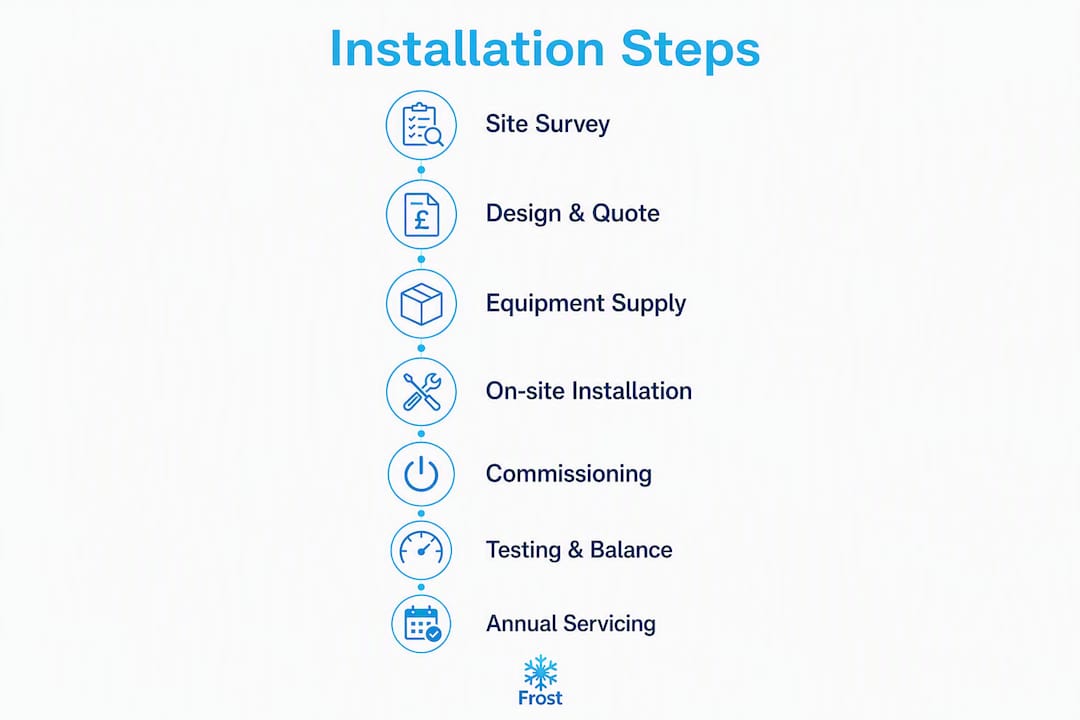
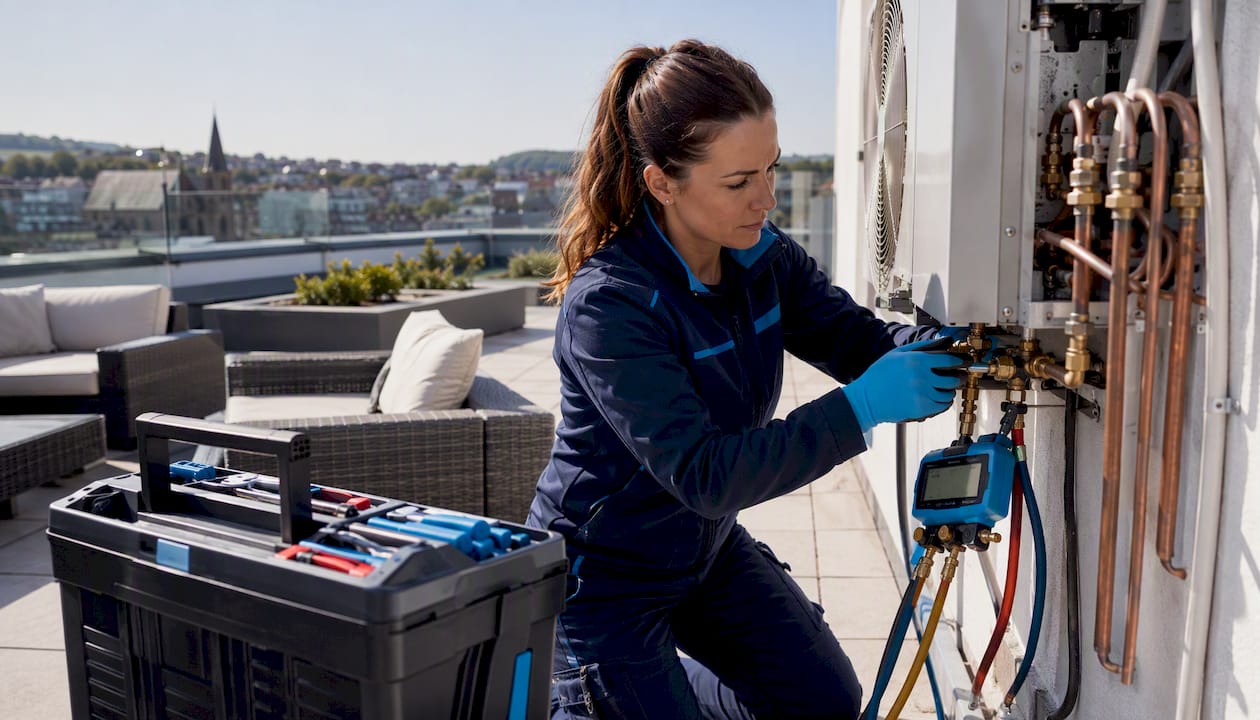
Commissioning is where a system proves itself. Once pipework is complete, a certified engineer runs a nitrogen pressure test held for a minimum of 30 minutes, then evacuates the system to below 500 microns for at least 30 minutes before charging refrigerant. Both steps are required under F-Gas guidance and protect the compressor from long-term damage. After charging, the engineer checks airflow, temperatures, and controls across every zone, adjusting fan speeds and refrigerant distribution until the system performs to specification. You receive a commissioning report and F-Gas records at handover.
Annual professional servicing keeps the system efficient and is often a condition of the manufacturer's extended warranty. Missing service records can void that warranty entirely.
Who is liable during the installation process?
Your installer carries public liability and professional indemnity insurance covering damage or injury during the works. Before any engineer sets foot on site, ask to see current certificates. Frostairconditioning provides a full Risk Assessment and Method Statement (RAMS) before work begins, which is standard practice for commercial sites and good practice for domestic ones.
The client's obligations matter too. You are responsible for obtaining planning permission, listed building consent, or landlord/freeholder approval before the installation date. Failing to do so can halt work mid-project and create legal exposure for the property owner, not the installer.
Which system type suits a commercial site?
Split systems work well for single offices or retail units: one outdoor unit, one indoor unit, straightforward to install. Multi-split configurations serve several rooms from a single outdoor unit, reducing roof or wall penetrations. For larger commercial premises, a VRF (Variable Refrigerant Flow) system handles multiple zones independently, with precise temperature control in each. Packaged rooftop units suit warehouses or buildings where indoor space is at a premium. The right choice depends on floor area, occupancy, heat gains from equipment, and the building's electrical capacity — all factors a heat-load calculation resolves.
Does your building's electrics need upgrading?
Most split systems require a dedicated circuit from the consumer unit. Larger multi-split or VRF installations may need a three-phase supply or a distribution board upgrade. The final connection from the outdoor isolator to the consumer unit is commonly excluded from installation quotes and typically adds £150–£300 if a separate electrician carries it out. Confirm this is included in your quote before signing.
Why a site survey is the only reliable starting point
Inadequate heat-load calculations are the most common cause of underperforming systems. A proper survey measures room areas and orientations, assesses insulation and glazing, records occupancy and equipment heat gains, identifies indoor and outdoor unit locations, plans pipe routes, and confirms electrical supply. That data produces a bespoke design. Without it, any quote is a guess, and an undersized or oversized system costs more to run and fails sooner.
A thorough site survey also catches constraints early: listed building status, outdoor unit clearance restrictions, and electrical capacity limits. Catching these before installation day prevents costly surprises.
Frostairconditioning: local installation across Exeter and the South West
Faster installation without cutting corners is the real advantage Frostairconditioning offers homeowners and businesses across Devon, Cornwall, and the wider South West.

Frostairconditioning handles every stage: site survey, bespoke heat-load design, equipment supply, installation, commissioning, and annual maintenance contracts. Systems are available from Samsung, Mitsubishi, Toshiba, and Daikin, so the right unit for your building is always in scope. Engineers are REFCOM/F-Gas certified, 0% finance is available, and same-day or next-day response applies where the job allows.
Request a fixed-price quote or book a domestic installation survey today. Commercial and shop-fitting projects are equally welcome.
Key takeaways
A professional air conditioner installation requires a site survey, F-Gas certified engineers, and a written quote that lists every inclusion before work begins.
| Point | Details |
|---|---|
| F-Gas certification is mandatory | Installers must hold a personal qualification and a Company Certificate, valid for three years. |
| Survey before any quote | Only a heat-load calculation produces a reliable fixed price; phone quotes are guesswork. |
| Electrical costs can be extra | Final connection to the consumer unit typically adds £150–£300 if not included in the quote. |
| Timescales to expect | Most single-room installs complete in one day; multi-room or commercial sites take longer. |
| Frostairconditioning | Covers Exeter and the South West with F-Gas certified engineers, 0% finance, and same-day response. |
The part most people get wrong
Most installation problems trace back to one decision made before a single tool is unpacked: accepting a quote without a survey.
A phone quote cannot account for the glazing on your south-facing office wall, the heat from your server rack, or the fact that your outdoor unit location puts it within a metre of a neighbour's window. Those details change the system size, the pipe run, and sometimes the planning position entirely. Skipping the survey to save time almost always costs more time later.
The second mistake is hiring on price alone without checking F-Gas status. UK regulations make it illegal to install or service refrigerant-containing systems without the correct certification. An uncertified install leaves you with no valid warranty, no F-Gas records, and potential liability if the system leaks.
On the contractor side, Frostairconditioning's responsibility is to deliver RAMS documentation, a full commissioning report, and F-Gas handover records. On the client side, that means having planning permissions and landlord approvals in place before the installation date, and arranging a qualified electrician for any consumer unit works not included in the scope.
Pro Tip: Ask your installer to confirm in writing whether the final electrical connection to the consumer unit is included. If it is not, budget £150–£300 and arrange a Part P-registered electrician. Keep every annual service record: they are your evidence that the manufacturer warranty remains valid.
Useful sources and next steps
Before you sign anything, verify your installer's credentials and understand the legal framework:
- The Fluorinated Greenhouse Gases Regulations 2015 — the primary legislation governing F-Gas obligations for installers and employers.
- GOV.UK F-Gas guidance — plain-language guidance on who needs certification and what equipment is covered.
- REFCOM F-Gas certification FAQs — explains Company Certificate requirements and how to check a business's registered status.
Company F-Gas Certificates are valid for three years. Always ask for the certificate reference and check the expiry date before work begins.